

1. Negative Ion Generators
A negative ion generator is a device that produces negative air ions. Incoming direct or alternating current first passes through electromagnetic interference (EMI) suppression and surge-protection circuits. Pulse circuitry, overvoltage protection, current limiting, and high- and low-voltage isolation circuits then convert it into high-voltage alternating current. Rectification and filtering using specialized electronic materials produce a clean, high-voltage negative DC output.
This negative high voltage is connected to an emitter tip made of metal or carbon. The high voltage creates a corona discharge at the tip, rapidly releasing large quantities of electrons (e⁻). Free electrons cannot remain in the air for long—the source describes their lifetime as being on the nanosecond scale—and are immediately captured by oxygen molecules (O₂), forming negative air ions.
Negative ions are negatively charged microscopic particles. Negatively charged oxygen molecules combine with small water molecules to form negative ions. The generator uses high-voltage corona discharge to increase the concentration of negative ions in the air.
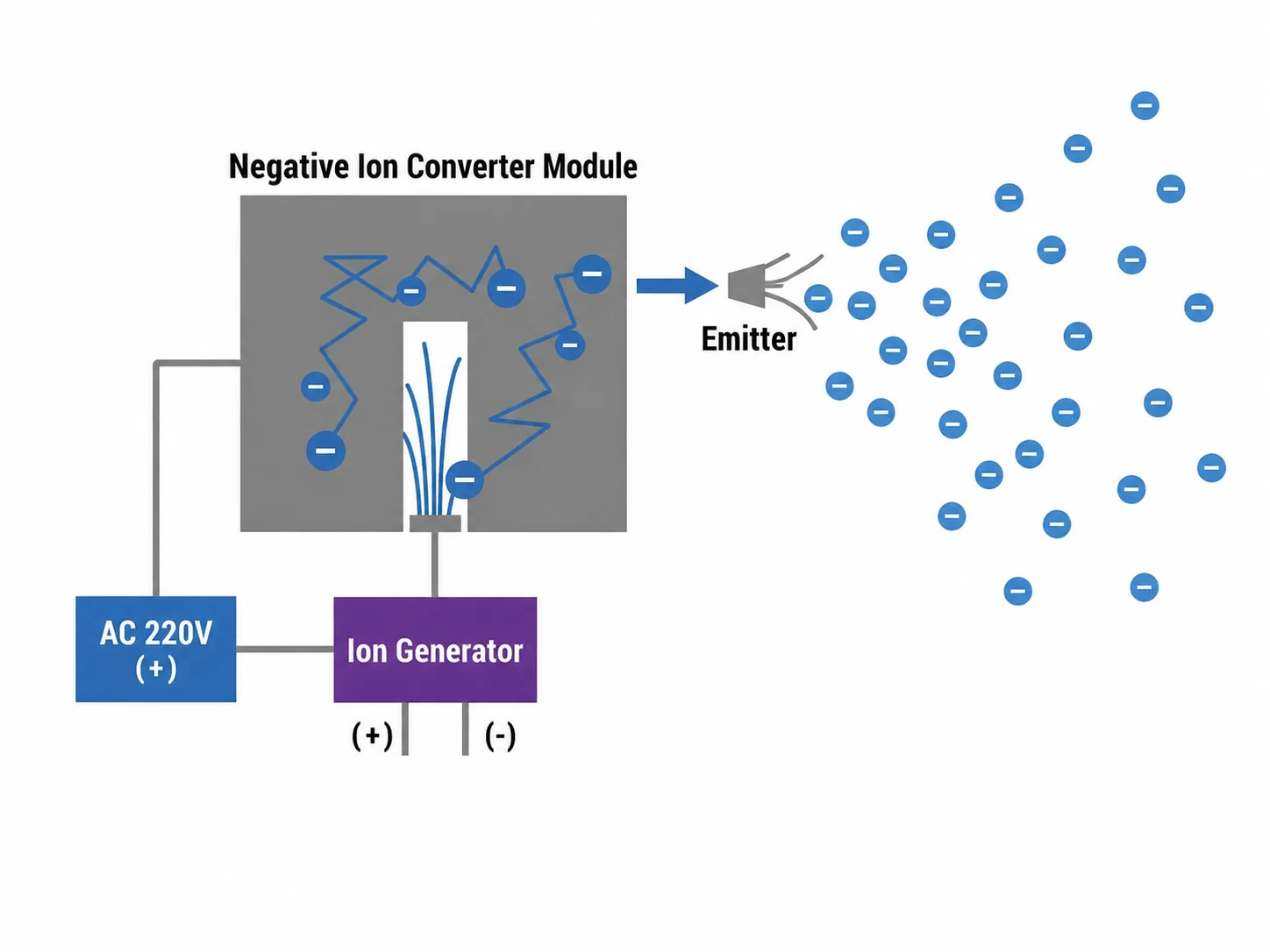
Large negative ions help remove airborne dust and promote its deposition, making them common in air-purification applications.
Air Freshening, Smoke Removal, and Dust Reduction
The source describes negatively charged ions interacting with positively charged smoke and dust particles suspended in the air, neutralizing their electrical charge and causing them to settle naturally.
Hair Care and Particle Collection
According to the original article, negative ions can improve moisture retention in hair. The hair cuticle has a scale-like structure, and its scales can become raised. The article states that negative ions can help these scales lie flat again, making hair appear shinier, and can neutralize static electricity between strands to help prevent split ends.
Negative ions released by the generator charge airborne particles such as smoke, dust, bacteria, spores, pollen, and dander. These charged particles are then attracted to an electrical collection device.
The original article claims that this produces better results than purely physical methods such as filtration or adsorption. It states that filtration—even with very fine filter pores—cannot capture solid particles smaller than the pores or gaseous pollutants, while adsorption materials such as activated carbon provide only selective adsorption.
2. Ozone Generators
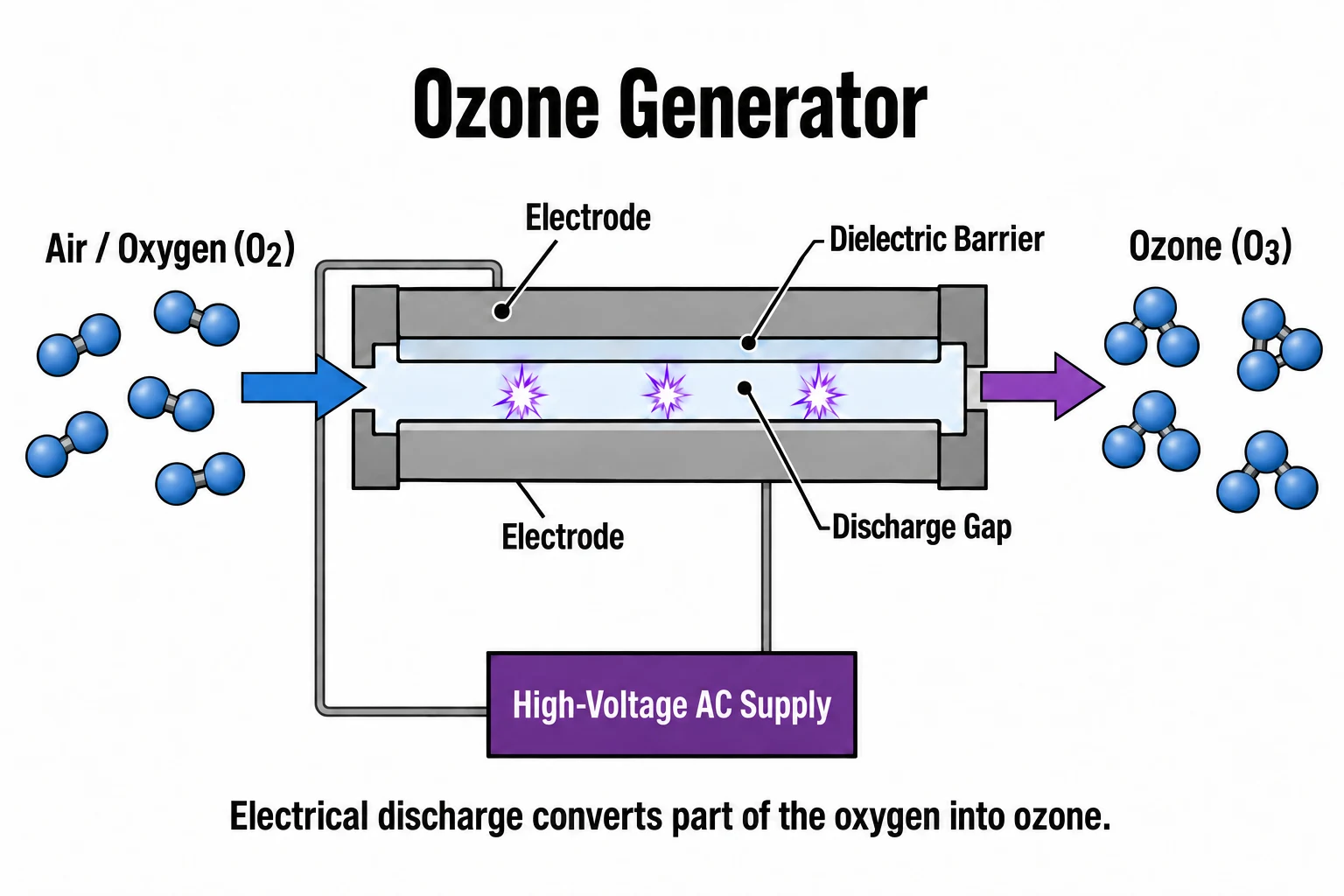
An ozone generator is a device that produces ozone gas (O₃). Ozone decomposes readily and generally cannot be stored, so it must be generated and used on-site. Short-term storage is possible under special conditions. Consequently, applications requiring ozone generally require an ozone generator.
Ozone generators are widely used in drinking-water treatment, wastewater treatment, industrial oxidation, food processing and preservation, pharmaceutical synthesis, and space disinfection. The ozone produced can be used directly or mixed with a liquid through a mixing device to participate in chemical reactions.
High-voltage electrical discharge—or chemical or photochemical reactions—converts part of the oxygen in the air into ozone. This is a transformation between different molecular forms of the same element. Ozone can also be produced through water electrolysis.
Because ozone is unstable, storing it in cylinders is difficult. It is normally generated on-site and used as needed. Ozone generators are divided into three main types according to their production method: high-voltage discharge, ultraviolet irradiation, and electrolysis.
Applications Described in the Source
The following eight applications and their claimed results are translated from the original article.
1. Food Purification
The source describes ozone being used to break down residual fertilizers, pesticides, and other harmful substances on and within fruits, vegetables, and grains. It also claims removal of antibiotics, chemical additives, hormones, and other harmful substances from meat and eggs, and the killing of salt-loving bacteria in seafood that can cause food poisoning.
2. Drinking-Water Purification
The original article describes ozone-treated tap water as high-quality, soft drinking water. It states that introducing O₃ into each litre of water for two minutes can remove residual chlorine, kill microorganisms, disinfect, eliminate odors, remove heavy metals, prevent chloroform formation, and increase the water’s oxygen content, producing clean drinking water at home.
3. Disinfection and Sterilization
The article states that placing washed tableware in water and introducing O₃ for 20 minutes can remove detergent residues and kill bacteria and viruses. It presents this as an alternative to an electric disinfection cabinet and a way to prevent disease transmission through tableware. It also describes using ozonated water to disinfect and deodorize clothing, towels, cleaning cloths, and socks.
4. Air Purification
The source describes placing an ozone outlet tube at least 1.7 metres above the floor and releasing O₃ for 20–30 minutes. It claims that this removes odors associated with indoor dust or decorative materials, reduces dust, kills microorganisms, increases the oxygen content of the air, and creates a fresh atmosphere resembling a forest after rain. It lists homes, offices, meeting rooms, and entertainment venues as applications for smoke removal, dust reduction, disinfection, and deodorization.
5. Fruit and Vegetable Preservation and Mold Prevention
For household food preservation, the article states that introducing O₃ into a bag containing fruits and vegetables for two minutes can extend freshness by seven days. It also lists cellar mold prevention and fruit and vegetable transport as applications.
6. Bathing, Beauty, and Health Care
The article describes ozone bathing as a growing trend abroad and states that ozone baths have been used to treat illness for many years. It claims that regular ozone baths can remove toxins from the body, activate epidermal cells, eliminate acne, lighten the skin, and provide beneficial effects for rheumatic conditions, skin diseases, gynecological conditions, diabetes, and fungal nail infections.
7. Fish Farming and Plant Watering
The article states that using ozonated water for flowers and greenhouse vegetable irrigation can prevent pest damage and reduce pesticide use. For fish farming and aquaculture, it states that O₃ releases nascent oxygen into the water, kills bacteria and viruses, purifies the water, prevents spoilage and deterioration, and increases dissolved oxygen.
8. Deodorization
Because ozone has strong oxidative properties, the article claims that it can rapidly and thoroughly eliminate various odors in air and water.
3. Plasma Generators: Positive and Negative Ion Generators
A plasma generator primarily works by using a voltage-boosting circuit to convert low voltage into high positive and negative voltages. These voltages ionize the air—primarily oxygen—to produce large quantities of positive and negative ions.
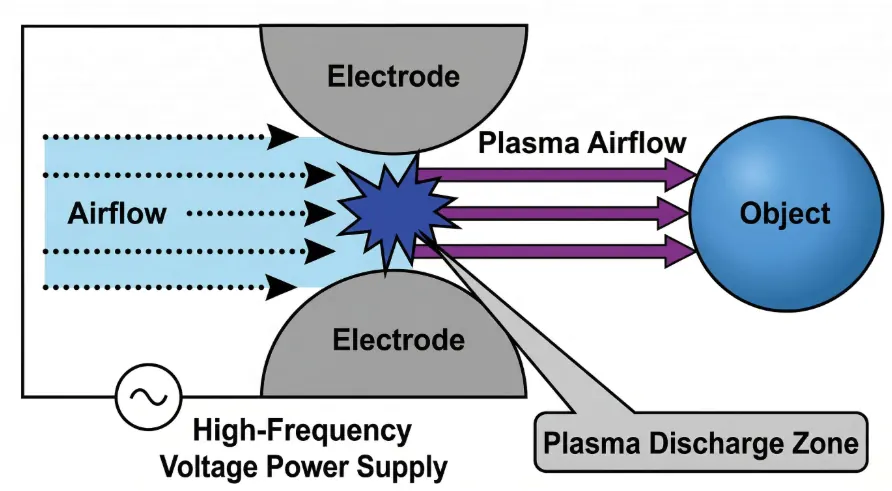
The article states that the number of negative ions exceeds the number of positive ions, with approximately 1.5 times as many negative ions.
It describes the simultaneous neutralization of positive and negative charges in the air as releasing a large amount of energy. According to the article, this energy changes the structure of surrounding bacteria or causes energy transformations that kill them, producing a bactericidal effect.
Because negative ions outnumber positive ions, the remaining negative ions continue to float in the air. The article attributes smoke removal, dust reduction, odor elimination, improved air quality, and health benefits to these remaining ions.
Advantages Compared with Negative Ion Generators
A conventional negative ion generator uses the negative high voltage it produces to ionize the air and generate large quantities of negative ions.
The article explains that these negative ions neutralize the small number of positive ions naturally present in the air. It describes this neutralization as releasing energy that changes the structure of surrounding bacteria or causes energy transformations, killing the bacteria.
However, because naturally occurring positive ions are present in relatively small numbers, the article states that the bactericidal effect is very limited. It therefore claims that a positive and negative ion generator—a plasma generator—has a much stronger bactericidal effect than a negative ion generator.
Advantages Compared with Ozone Generators
Because ozone is a strong oxidizer, ozone disinfection and sterilization must take place in unoccupied spaces. Otherwise, ozone exposure can harm people and, in severe cases, cause poisoning.
A positive and negative ion generator, or plasma generator, simultaneously produces large quantities of both ion types. The article states that negative ions greatly outnumber positive ions, so positive ions are neutralized immediately after they are produced, preventing a large concentration of positive ions from accumulating in the air.
It further states that positive and negative ions are themselves components of air and that moderate quantities of positive ions have no side effects on the human body. On this basis, the article claims that positive and negative ion generators can purify and disinfect air in occupied spaces without causing harmful effects to people.