HVAC
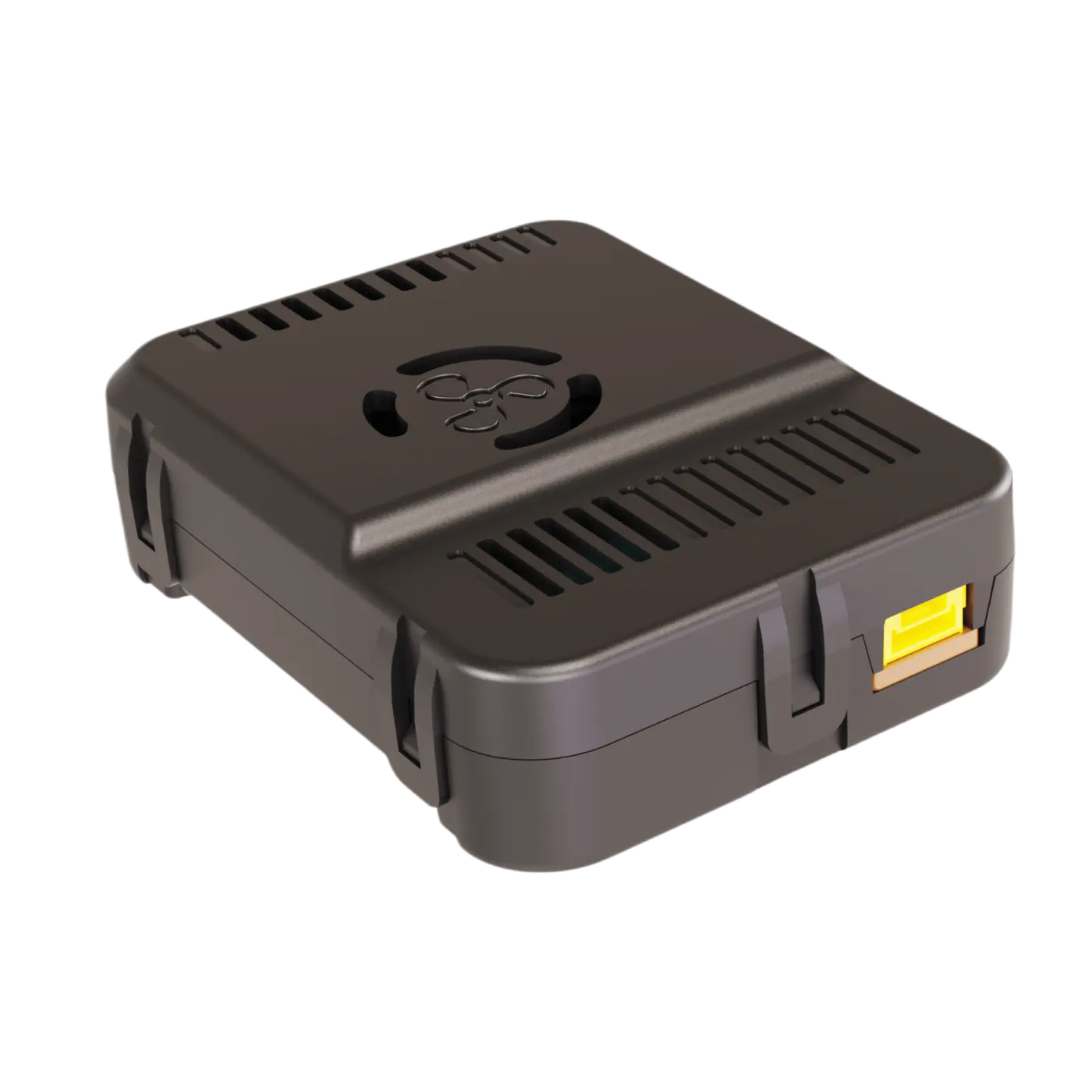
A54-20 5-in-1 Air Quality Sensor
Complete IAQ sensing platform integrating PM2.5, CO2, TVOC, temperature and humidity for fresh-air units, AHU systems and smart ventilation control.
Read more
VOLATILE ORGANIC COMPOUNDS SENSOR
MAXMAC provides reliable volatile organic compounds sensor solutions and flexible custom integration services for HVAC system manufacturers, smart home environmental control, and environmental monitoring applications. Production of every VOC gas sensor strictly follows ISO 9001 and IATF 16949 certified quality management systems and is supported by a CNAS-accredited national-level comprehensive laboratory, covering the full process from rapid early-stage sample evaluation through high-volume production. With comprehensive OEM/ODM technical support, we help ensure stable operation of your VOC air quality sensor across diverse environments.
PRODUCT CATALOG
Complete IAQ sensing platform integrating PM2.5, CO2, TVOC, temperature and humidity for fresh-air units, AHU systems and smart ventilation control.
Read more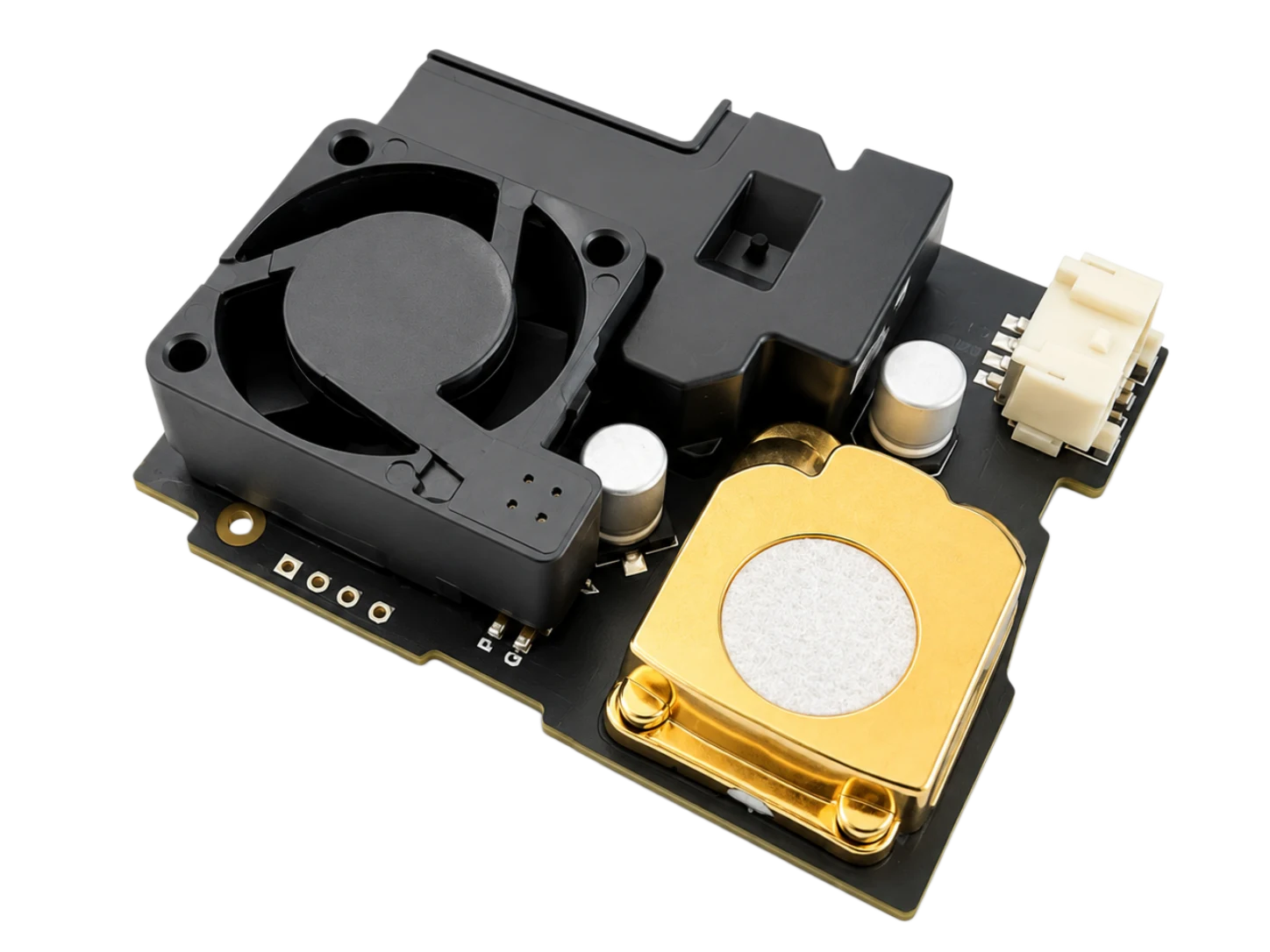
Integrated PM, CO2, temperature, humidity and optional AQS/TVOC sensing with customizable interfaces and relay control.
Read moreTECHNICAL DATA

TECHNICAL INSIGHTS
MAXMAC’s VOC gas sensor and related TVOC sensor products use advanced metal oxide semiconductor (MOS) detection technology. Inside the sensor, a nano-scale metal oxide film reaches a specific operating temperature under the action of an integrated heating electrode. At this temperature, oxygen molecules from the air are adsorbed onto the surface and form a charge-enriched layer. When volatile organic compound molecules in the surrounding environment contact the chip surface, they undergo a reduction reaction with the adsorbed oxygen, causing the conductivity of the semiconductor film to change sharply in proportion to the gas concentration. This physicochemical process converts VOC exposure into a highly stable gas-concentration signal with an exceptionally fast response.
For industrial and commercial environments that demand high sensitivity, this efficient VOC sensor module can accurately capture trace changes in gas molecules and provide highly linear, core-level data for modern equipment. A proprietary dynamic temperature and humidity compensation algorithm, combined with a multi-layer physical protection design, effectively minimizes uncertain MOS baseline drift caused by rapid environmental fluctuations. This helps ensure excellent sensor-to-sensor consistency and dependable long-term reliability in every sensor delivered to our customers.
CALIBRATION & VALIDATION


Our dedicated modular intelligent AQS and VOC calibration and testing matrix gives every VOC/AQS module an independently traceable calibration data stream with real-time status visualization. This module-level response-logic calibration helps maintain highly consistent linearity across changes in gas concentration. It also enables high-volume OEM customers to clearly verify the health and calibration status of each sensing chip throughout the supply chain, supporting automotive-grade and demanding industrial quality-traceability standards.
Every sensor undergoes two separate calibration stages to ensure maximum accuracy and consistency. During production, each sensor module is calibrated to establish its baseline calibration curve. After the module has been integrated into the fully assembled unit, the complete system is calibrated again before shipment. This module-level and final system-level calibration process compensates for variations introduced during assembly and helps ensure reliable, consistent long-term performance in the finished product.
To eliminate performance risks, we conduct rigorous environmental reliability testing using advanced chambers that simulate extreme temperature and high-humidity environments. We enforce a strict pilot production validation phase: mass production is initiated only after sensors consistently pass these harsh environmental stress tests. By addressing temperature drift and cross-sensitivity in the early stages, we help engineers resolve critical environmental interference issues during their initial design phase, ensuring robust and stable real-world deployment.
To ensure long-term durability and facilitate maintenance-free operation for our clients, we subject the first batch of pilot production to a rigorous 1-week (168-hour) continuous burn-in test. This intensive aging test process is designed to eliminate early-life sensor drift and stabilize electrochemical reactions. By proactively aging the sensors under load, we guarantee exceptional long-term stability and prevent field failures, significantly reducing post-installation maintenance overhead and total cost of ownership (TCO).
CUSTOMIZABLE VOC SENSOR PLATFORM
Built on MAXMAC’s configurable IAQ multi-sensor platform, a dedicated VOC module can be combined with CO2, particulate matter, temperature and humidity measurements in one compact assembly. For applications that need both gas indicators, we can configure a purpose-built VOC CO2 sensor that delivers calibrated VOC and CO2 data through a single integrated module.
Multiple measurements are consolidated through one data interface, simplifying wiring, PCB layout, firmware development and final product integration. OEM customers can specify the sensing combination and customize the communication method, PCB dimensions, mechanical structure and optional relay control.
Configure the VOC response range, baseline logic and calibration strategy for your target application.
Add high-accuracy environmental data for monitoring and dynamic sensor compensation.
Transmit all measurements through UART, I²C, PWM, analog voltage, RS485, CAN, LIN or a custom protocol.
Integrate calibrated NDIR CO2 measurement to create a compact VOC CO2 sensor with unified data output.
Add particle-size outputs, measurement ranges, airflow design and calibration as required.
Add or omit relay control to match the customer’s control strategy and PCB design.
Combine VOC/TVOC, CO2, PM1.0, PM2.5, PM10, temperature and humidity functions according to product positioning and installation space.
One connector can transmit multiple sensor outputs, reducing wiring, controller inputs and integration complexity.
Customize relay control, communication protocol, connector, PCB dimensions, firmware logic, calibration and output format.
MANUFACTURING CAPABILITIES
As a professional Smart Sensor manufacturer, MAXMAC operates its own SMT production area with comprehensive PCB assembly and inspection capabilities. Key processes are completed in-house, including electronic component placement, reflow soldering, AOI inspection, firmware programming and functional testing. This integrated capability accelerates prototyping, pilot production and product iteration while supporting OEM/ODM customization of each air quality sensor module, including sensing combinations, interfaces, PCB dimensions, connectors and firmware logic.


MAXMAC combines automated production lines with flexible manual assembly to match different IAQ product structures, order volumes and customization requirements. Automated equipment protects consistency and delivery efficiency in volume production, while skilled workstations support complex assembly, pilot runs and customized air quality sensor module configurations.
Every production stage is connected to our MES system, enabling full traceability across material batches, PCB assembly, sensor calibration, firmware programming and finished-product inspection. This complete manufacturing data trail gives OEM/ODM customers dependable quality assurance and supports reliable volume delivery from an experienced Smart Sensor manufacturer.
TESTING & VALIDATION
MAXMAC’s CNAS-accredited laboratory brings product verification closer to our engineering and manufacturing teams, significantly shortening validation cycles and accelerating the transition from design to volume production. By identifying design weaknesses, potential failure modes, and risk-control points at an early stage, our laboratory capabilities help prevent issues before they reach customers or enter mass production.
Comprehensive mechanical, electrical, environmental, gas, and microbiological testing enables us to verify product performance under demanding operating conditions. This evidence-based validation process strengthens product stability, long-term reliability, and quality consistency while giving OEM/ODM customers greater confidence throughout development and delivery.


TARGET APPLICATIONS

In chemical production, spray-painting operations and enclosed industrial spaces, organic solvents and VOC in paint emissions present serious risks to worker safety and environmental compliance. Our industrial VOC gas detector module provides an ultra-wide measurement range and strong resistance to sensor poisoning. It can serve as the central sensing core of a fixed explosion-proof wall-mounted instrument, supporting 24/7 online monitoring and linked alarms.

In green buildings and commercial HVAC fresh-air systems, demand-controlled ventilation (DCV) is increasingly shifting toward multi-parameter monitoring. Embedding a high-sensitivity MOS sensor in a VOC air quality monitor or building-control terminal enables real-time detection of trace harmful gases released by carpets and furniture. The system can automatically open fresh-air dampers, protecting indoor health while delivering excellent energy efficiency.

Our low-power multi-in-one sensor module with integrated VOC detection is an ideal choice for mobile and portable VOC monitor equipment. Its ultra-compact footprint and low energy consumption significantly extend hand-held device battery operating time while maintaining high-accuracy measurement output.

CASE STUDIES
MAXMAC can embed a multi-in-one sensor module with integrated VOC detection directly into a smart thermostat. Through this compact sensing architecture, the thermostat can manage air conditioning, fresh-air ventilation and underfloor heating from one control terminal while receiving continuous VOC and environmental data from the room.
The finished thermostat also operates as a real-time indoor air quality monitor. It continuously tracks changes in room air quality and provides the data required for intelligent HVAC responses, helping connected equipment maintain a healthier indoor environment while continuously protecting room air quality.
In environmental monitoring and industrial safety, the professional VOC sensor meaning refers to an integrated electronic component designed to qualitatively or quantitatively detect volatile organic compounds in air, including benzene, toluene, formaldehyde, ketones and hydrocarbons. Through physical or chemical reactions, the sensor converts gas concentration into a measurable electrical signal, making it a foundational component for indoor air-quality assessment and industrial-emissions monitoring.
With reference to indoor-health guidance commonly associated with the World Health Organization and LEED green-building practice, acceptable VOC levels ppm are generally targeted below 0.5 ppm for a healthy indoor environment. Expressed using a finer measurement scale, typical VOC ppb limits are often targeted within 300 ppb to 500 ppb. If monitoring data remains above the selected limit, the fresh-air or ventilation system should respond promptly. Actual project thresholds should always follow the applicable local regulation, target compound and calibrated sensor specification.
In newly completed offices and commercial spaces, a typical TVOC normal range baseline may fluctuate between 0 ppb to 200 ppb. Conventional sensing elements can experience baseline drift after prolonged exposure to complex background gases, potentially causing repeated false alarms. Before shipment, our sensors undergo extended pre-aging to release internal stress and use an intelligent zero-point compensation algorithm to address baseline shifts associated with production handling and long-term operation.
Yes. For smart-home integrators and commercial IoT customers seeking VOC sensor Home Assistant connectivity, our hardware modules support standard UART (TTL) and I²C communication protocols. Our engineering team can provide manufacturer-level low-level driver-code examples, enabling system engineers to connect the module efficiently to wireless gateways and support rapid data synchronization and smart-device automation through open platforms such as Home Assistant.
A PID VOC sensor or PID gas detector uses a high-energy ultraviolet lamp to ionize gas molecules through photoionization. Our products use metal oxide semiconductor (MOS) technology, which produces a signal by measuring conductivity changes as gases interact with a heated semiconductor film. Compared with a high-cost, high-power PID sensor for VOC detection, MOS sensors offer a substantial cost advantage, long service life and a compact footprint. This makes MOS technology a practical choice for volume commercial HVAC systems, intelligent-building terminals and consumer air-quality monitors.
Key factors influencing VOC sensor price include the underlying detection principle, such as higher-cost PID technology versus cost-efficient MOS technology; the required calibration grade, such as industrial multi-point calibration versus basic consumer calibration; and the minimum order quantity (MOQ). As a direct Chinese manufacturer with an established semiconductor supply chain and automated modular calibration lines, MAXMAC can provide tiered factory pricing without distributor markups.
Whether your project requires a core sensing element or a complete communication module, we can provide a competitive VOC sensor price while supporting automotive- and industrial-grade reliability. Please contact us to request a customized factory quotation for your projected production volume.
Our product experts will provide the most suitable air solutions and product recommendations.