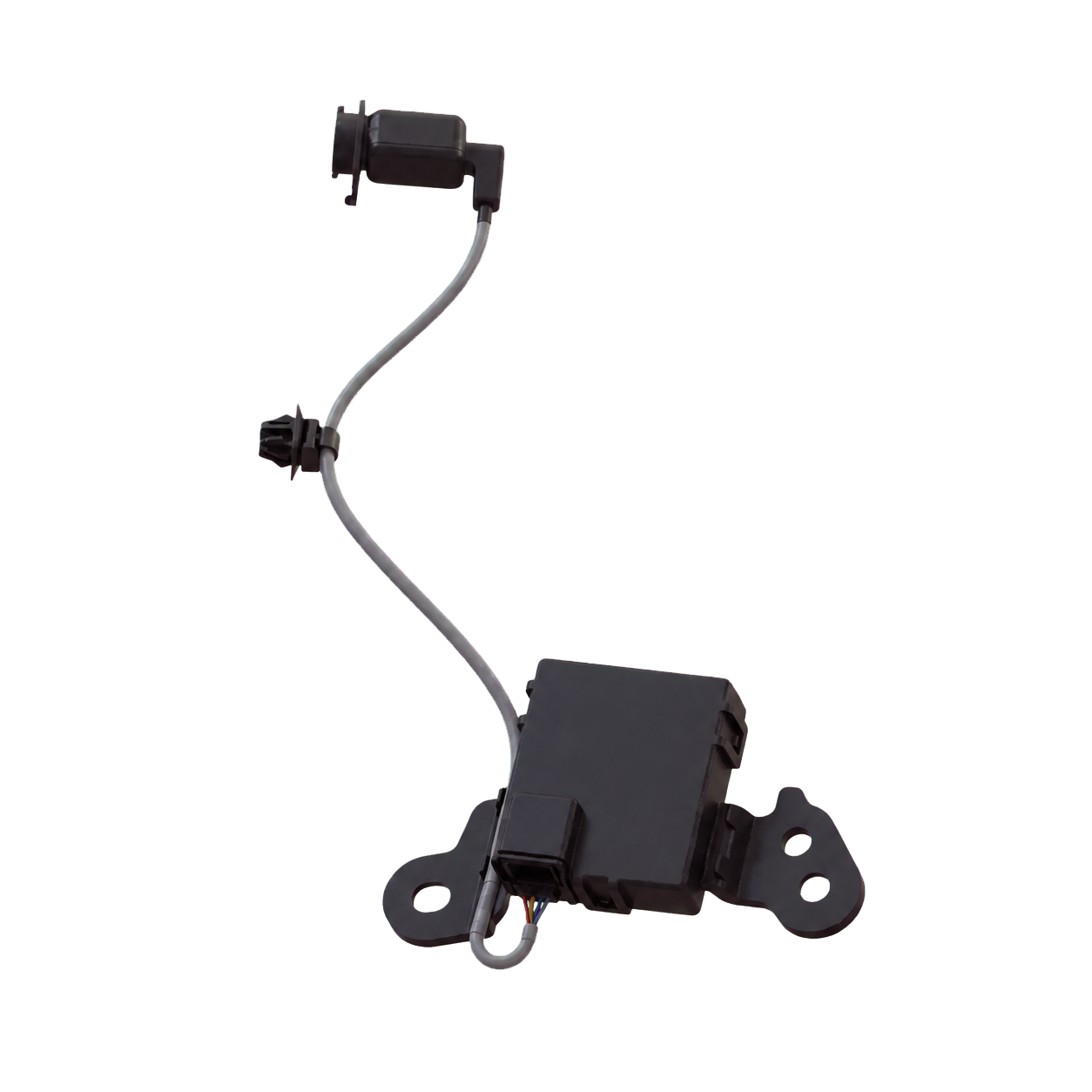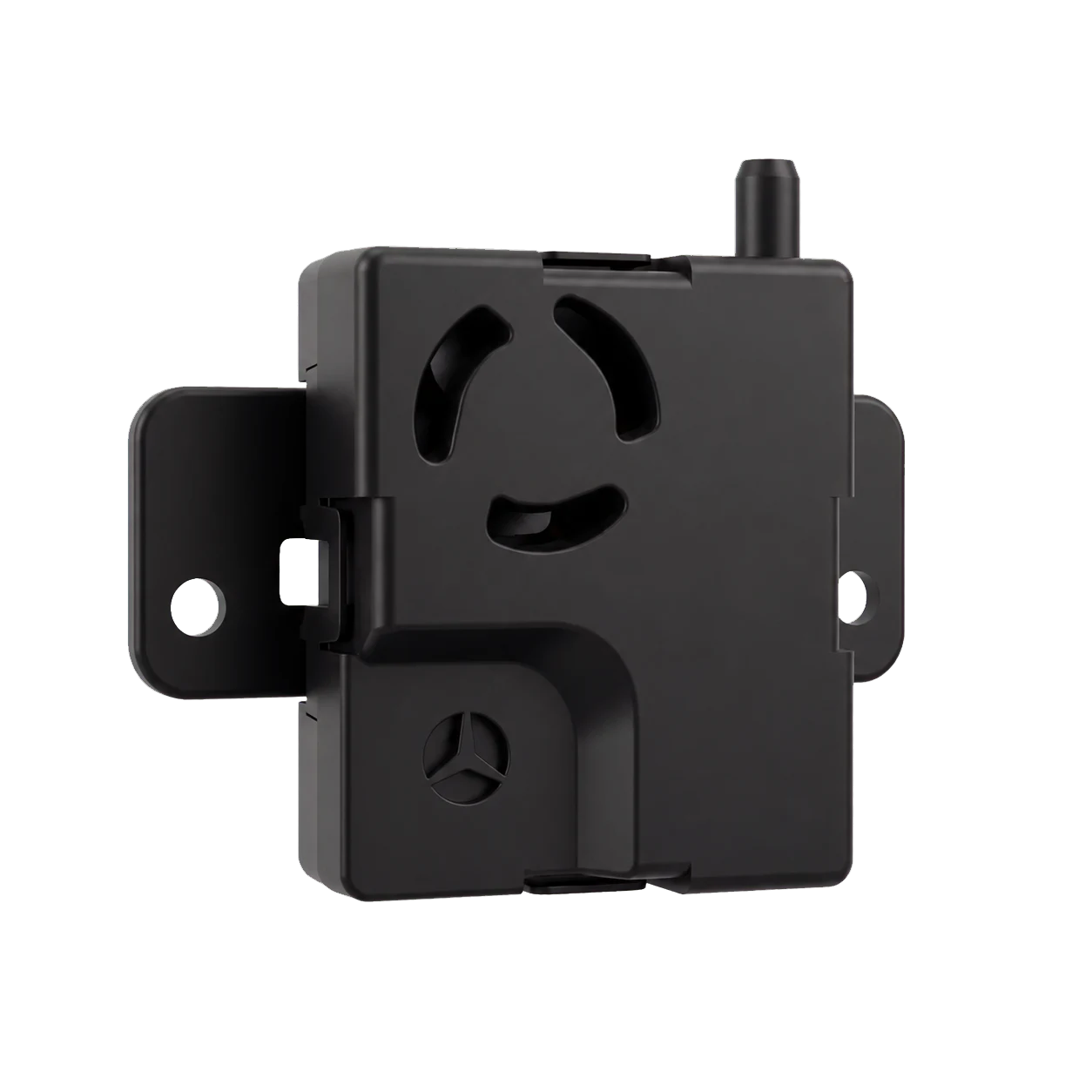
HVAC and indoor air quality system using a MAXMAC NDIR CO2 sensor module

CARBON DIOXIDE SENSOR MODULE

Premium NDIR CO2 Sensor Module Manufacturer & OEM Supplier

MAXMAC provides highly reliable carbon dioxide sensor module solutions and flexible custom integration services for HVAC system manufacturers, smart home integrators, in-vehicle air quality control applications, and OEM customers worldwide. Our production is certified to ISO 9001 and IATF 16949, while our CNAS-accredited national laboratory provides comprehensive testing support. Our NDIR CO2 sensor modules and full range of CO2 gas sensor modules are supported by complete OEM/ODM services, from rapid early-stage prototyping through high-volume production, helping ensure stable operation and seamless integration into your systems and smart devices. Quickly review our CO2 Sensor Datasheet.

PRODUCT OVERVIEW

High-Performance CO2 Sensor Module for Industrial & Commercial OEM Integration

MAXMAC understands the significant time costs and technical challenges hardware engineers face during early-stage specification, spec-in, and solution selection. We provide highly reliable CO2 sensor modules engineered for long-term stability in demanding and constantly changing environments, along with comprehensive product-selection and circuit-design support from the beginning of your development process.

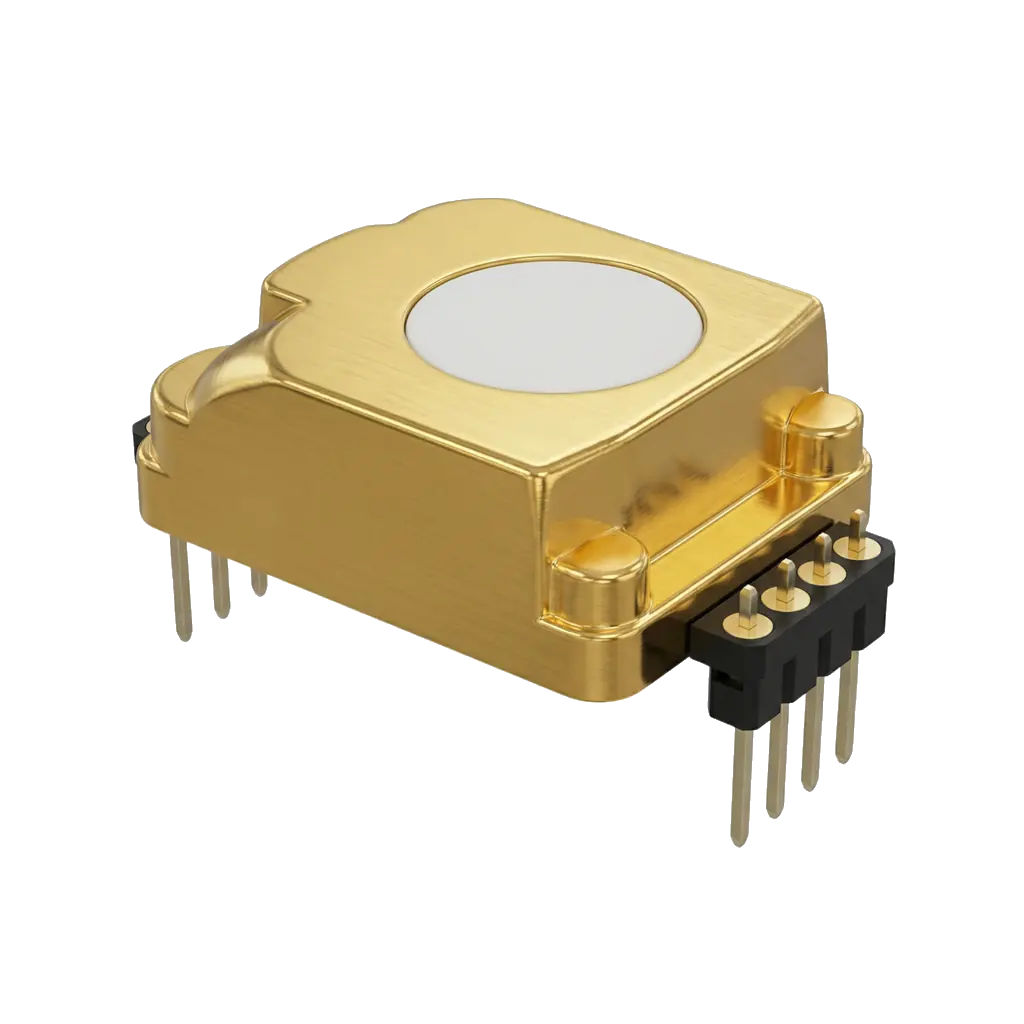
Based on proven non-dispersive infrared CO2 sensor technology, our compact module accurately transmits real-time signals to the main control board while greatly simplifying your peripheral circuit design.

  1. Highly flexible digital and analog interface customization, including UART, I2C, and PWM.
  2. Manufactured under strict IATF 16949 quality controls and validated to ISO 16750 standards.
  3. Two-stage calibration technology with a maintenance-free service life of up to 15 years.
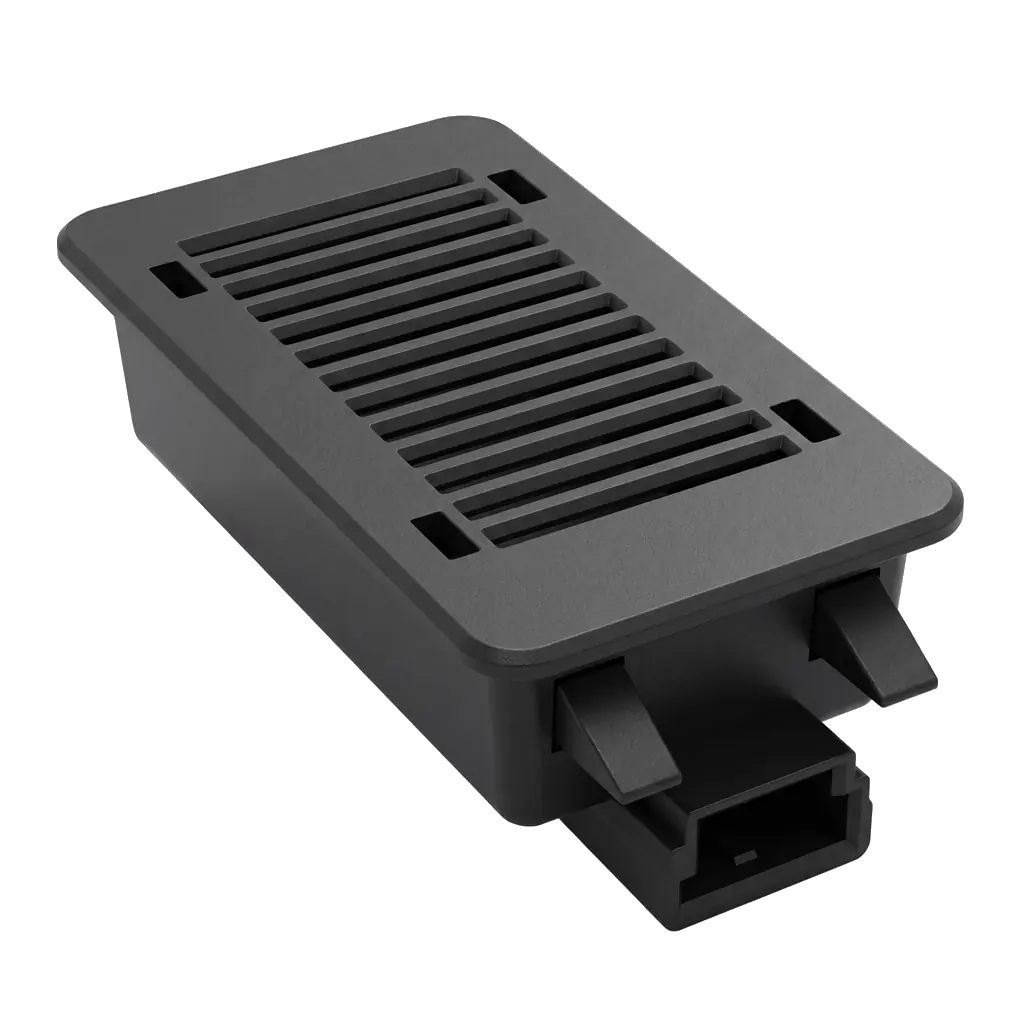
MAXMAC compact NDIR CO2 sensor module for industrial and commercial OEM integration
Download CO2 Sensor Datasheet

TECHNICAL DATA

CO2 Sensor Module Specifications

Detection Performance

Measured Gas
Carbon dioxide (CO2)
Measurement Principle
Non-dispersive infrared (NDIR)
Range
400–10,000 ppmOther customized ranges available
Resolution
1 ppm
Measurement Interval
4 seconds
Accuracy
400–3,000 ppm: ±(50 ppm + 3% of reading) Other ranges: ±(50 ppm + 5% of reading) or ±5%
Pressure Dependence
+1.6% of reading per kPa
Warm-up Time
15 seconds
Response Time (t63%)
< 20 seconds
Service Life
≥ 15 years

Electrical & Communication

Operating Voltage
4.5–6.5 VDC
Operating Current
Peak: 300 mA (< 10 ms/cycle)Average: 15 mA
Sleep Current
< 100 µA; sleep is disabled by default and can be enabled via protocol
Communication Interface & Output
UART (Modbus-compatible, expandable to RS485), PWM output

Environmental & Mechanical

Operating Temperature
0°C to 50°C
Operating Humidity
5–95% RH, non-condensingDew point: 40°C
Storage Temperature
-30°C to 70°C
Dimensions
30 mm × 20 mm × 9.7 mm
Weight
Approx. 5 g
Maintenance Requirements
Maintenance-free in normal applications when ABC is enabled
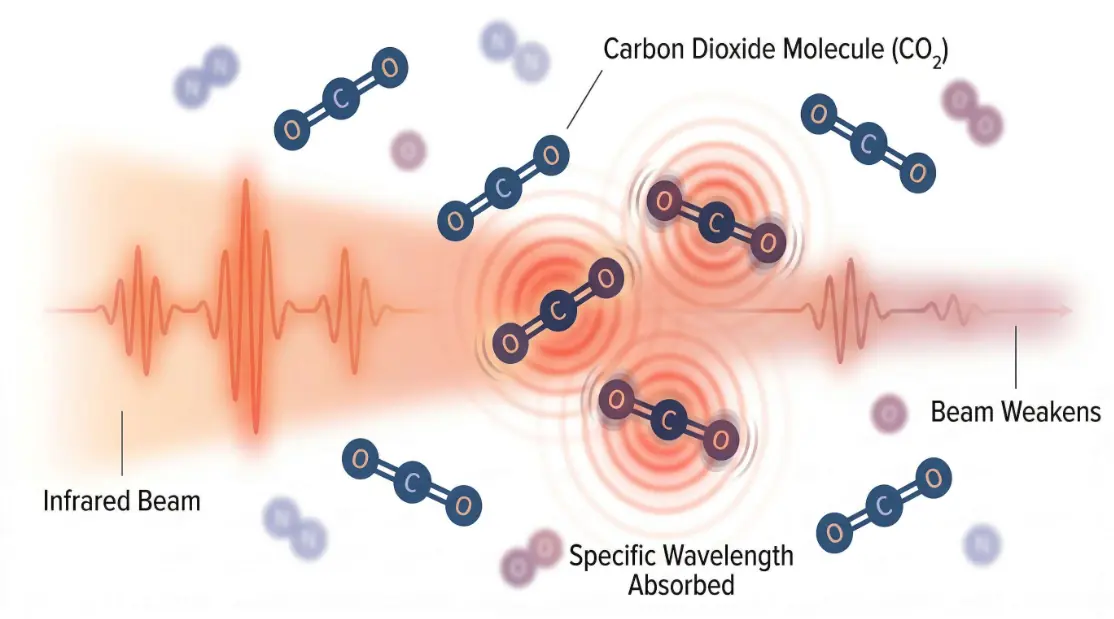
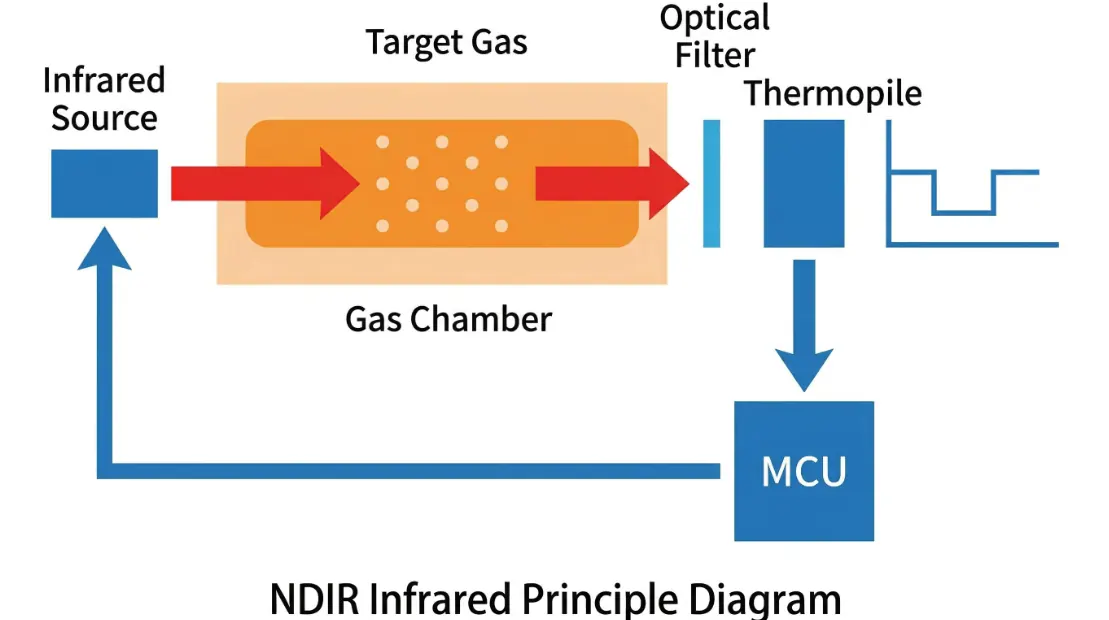
NDIR CO2 sensor module working principle showing infrared absorption in an optical gas chamber

TECHNICAL INSIGHTS

Advanced NDIR Technology & CO2 Sensor Working Principle

How Non-Dispersive Infrared (NDIR) Technology Ensures PPM-Level Accuracy

MAXMAC's NDIR CO2 sensor uses the non-dispersive infrared detection principle. CO2 naturally absorbs infrared light. When carbon dioxide in the surrounding air enters the independent optical gas chamber, it absorbs infrared energy at a specific wavelength. A precision optical detector captures the resulting change in infrared light intensity and converts it into a highly stable CO2 sensor ppm concentration signal.

Our multi-point dynamic temperature and humidity compensation algorithm effectively minimizes measurement influences caused by external air pressure and changing environmental conditions. We also perform a second pre-delivery calibration to correct potential zero-point drift caused by unpredictable mechanical stress within the CO2 optical chamber. Together, these measures help ensure the consistency and reliability of every CO2 sensor module delivered to our customers.

TECHNICAL ADVANTAGES

Powering the Next Generation of CO2 Sensor Module Technology

IAQ multi-sensor board calibration
01

Module-Level Calibration

Every CO2 sensor module manufactured by MAXMAC undergoes independent module-level calibration after assembly. During the calibrating sensors process, our intelligent measurement and control system monitors each module's data in real time, generating and storing a dedicated gas-detection calibration curve for every NDIR CO2 sensor. This fully visualized and traceable calibration system helps ensure that every module delivered to you provides exceptional consistency and dependable industrial-grade accuracy.
CUSTOMIZABLE CO2 SENSOR PLATFORM

Customize Your CO2 Sensor with a Multi-Parameter IAQ Platform

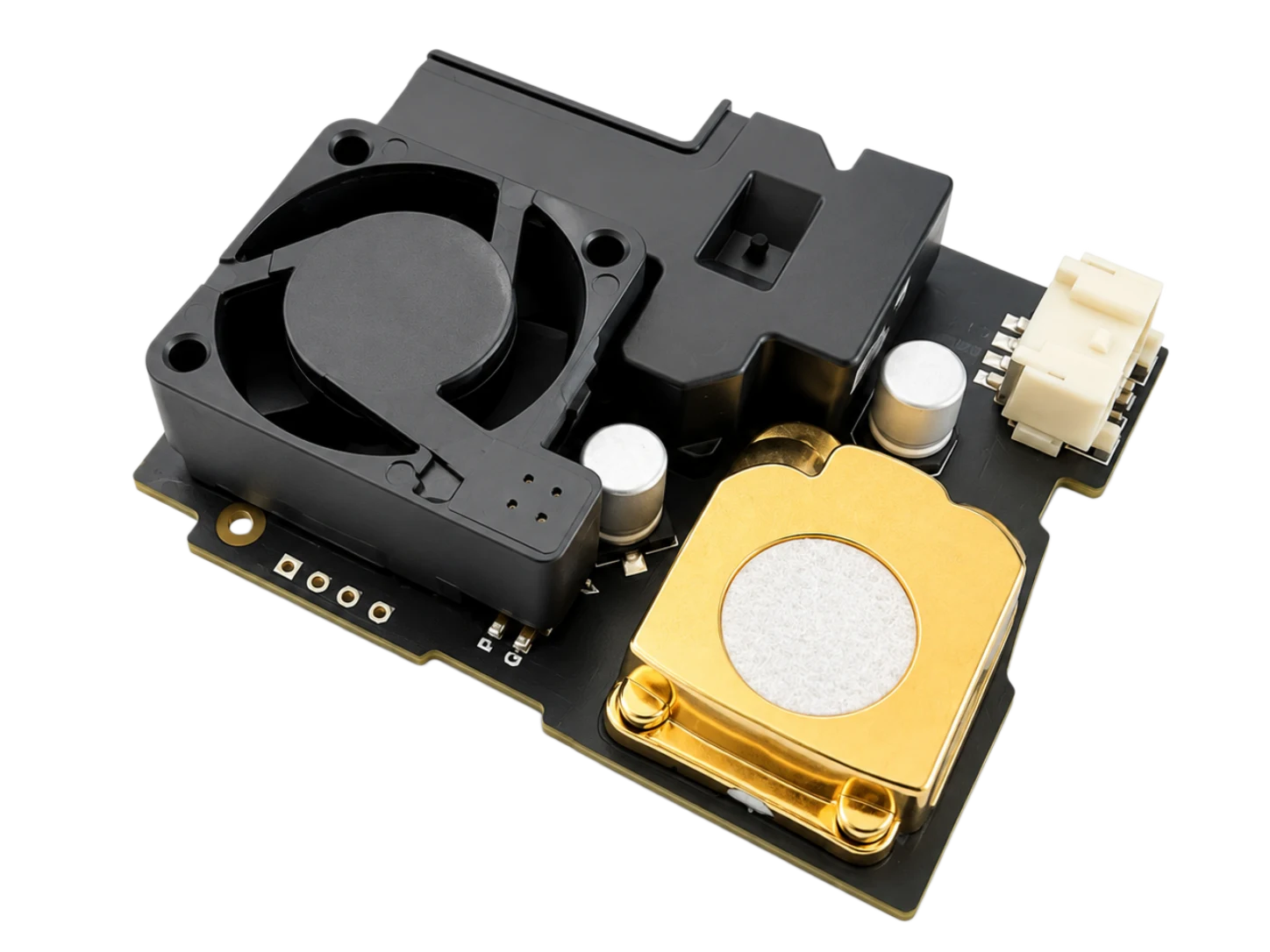
Built on MAXMAC’s configurable IAQ multi-sensor platform, our co2 sensor ndir architecture combines calibrated carbon dioxide measurement with PM, AQS/TVOC, temperature and humidity options in one compact co2 sensor module. Each sensing combination can be selected around the measurement range, response time, installation space and environmental requirements of your OEM application.

Multiple measurements are consolidated through one data interface, simplifying wiring, PCB layout, firmware development and final product integration. OEM customers can also specify relay control, communication method, connector, firmware logic, calibration strategy, data format, PCB dimensions and mechanical structure.

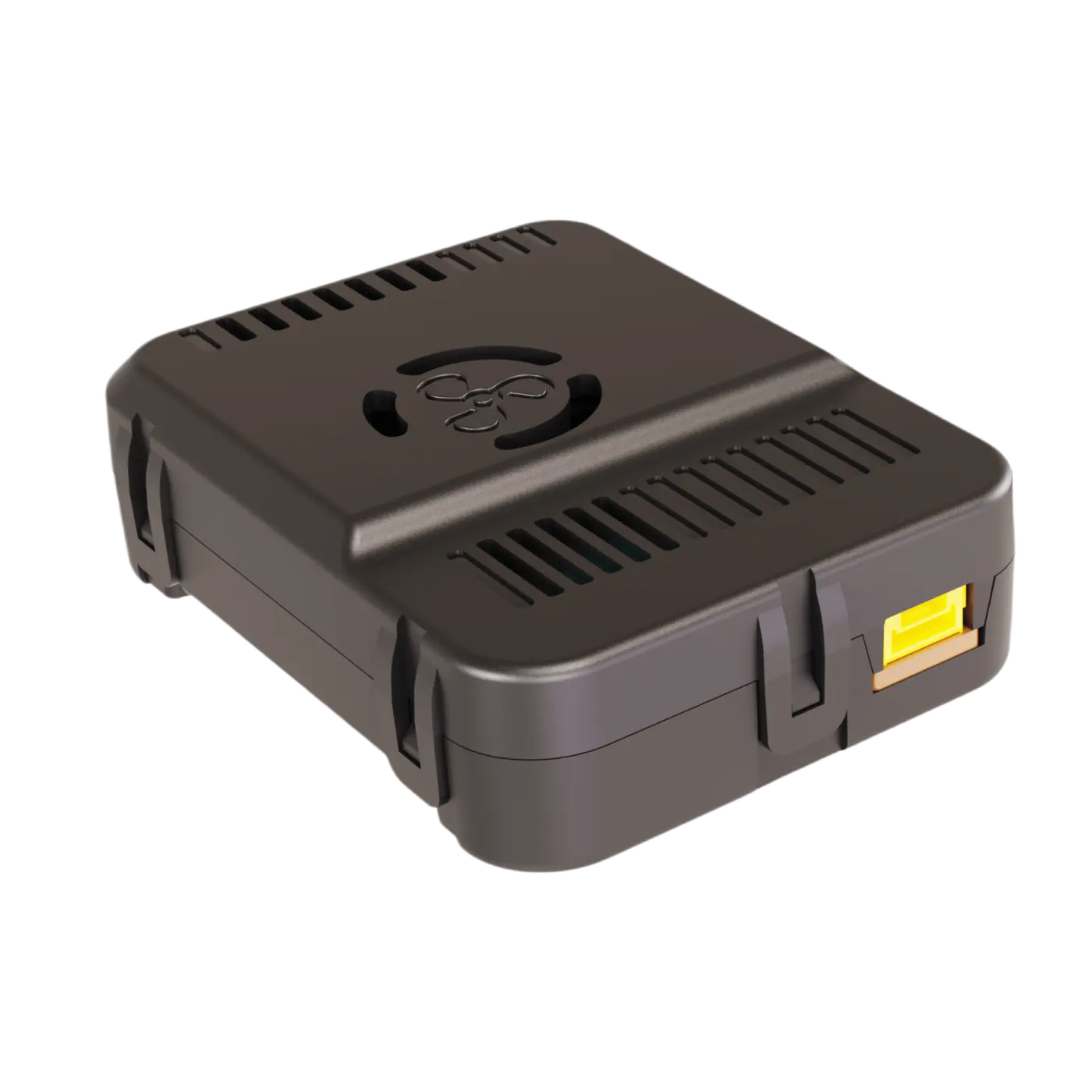
Custom PM sensor platform integrating particulate matter gas temperature humidity interface and relay options

PM1.0 / PM2.5 / PM10

Choose the particle-size outputs, measurement range, airflow design and calibration required by your application.

Temperature and Humidity

Add high-accuracy temperature and humidity data for environmental monitoring and sensor compensation.

One Custom Data Interface

Transmit all measurements through UART, I²C, PWM, analog voltage, RS485, CAN, LIN or a custom protocol.

Optional CO₂ Detection

Integrate calibrated NDIR CO₂ measurement into the same compact sensor module and unified data output.

AQS / TVOC Options

Add AQS or TVOC sensing for odor, pollution-gas and indoor air quality control applications.

Optional Relay

Relay control can be added or omitted to match the customer’s control strategy and PCB design.

Customize Your CO2 Sensor

8 Measurement Outputs Freely Combined

Combine PM1.0, PM2.5, PM10, CO₂, AQS/TVOC, temperature and humidity functions according to product positioning and installation space.

1 Unified Data Interface

One connector can transmit multiple sensor outputs, reducing wiring, controller inputs and integration complexity.

+ OEM Hardware and Firmware Options

Customize relay control, communication protocol, connector, PCB dimensions, firmware logic, calibration and output format.

MANUFACTURING CAPABILITIES

Complete Manufacturing Capabilities for OEM Smart Sensor Production

In-House SMT Manufacturing for Consistent Smart Sensor Quality and Faster Delivery

As a professional Smart Sensor manufacturer, MAXMAC operates its own SMT production area with comprehensive PCB assembly and inspection capabilities. Key processes are completed in-house, including electronic component placement, reflow soldering, AOI inspection, firmware programming and functional testing. This integrated capability accelerates prototyping, pilot production and product iteration while supporting OEM/ODM customization of each air quality sensor module, including sensing combinations, interfaces, PCB dimensions, connectors and firmware logic.

Flexible Production with Full MES Traceability

MAXMAC combines automated production lines with flexible manual assembly to match different IAQ product structures, order volumes and customization requirements. Automated equipment protects consistency and delivery efficiency in volume production, while skilled workstations support complex assembly, pilot runs and customized air quality sensor module configurations.

Every production stage is connected to our MES system, enabling full traceability across material batches, PCB assembly, sensor calibration, firmware programming and finished-product inspection. This complete manufacturing data trail gives OEM/ODM customers dependable quality assurance and supports reliable volume delivery from an experienced Smart Sensor manufacturer.

TESTING & VALIDATION

CNAS-Accredited Laboratory

MAXMAC’s CNAS-accredited laboratory brings product verification closer to our engineering and manufacturing teams, significantly shortening validation cycles and accelerating the transition from design to volume production. By identifying design weaknesses, potential failure modes, and risk-control points at an early stage, our laboratory capabilities help prevent issues before they reach customers or enter mass production.

Comprehensive mechanical, electrical, environmental, gas, and microbiological testing enables us to verify product performance under demanding operating conditions. This evidence-based validation process strengthens product stability, long-term reliability, and quality consistency while giving OEM/ODM customers greater confidence throughout development and delivery.

CNAS accreditation logo

Specialized Laboratory Facilities

  • Mechanical Reliability Testing Laboratory
  • Electrical Performance Testing Laboratory
  • Bacterial Culture Laboratory
  • Microbiological Testing Laboratory
  • Gas Testing Laboratory
  • Microbiological Inspection Laboratory
  • Balance Room
  • Precision Instrument Room
  • Ventilation Ducts Room
  • High Temperature Testing Laboratory
  • Product Aging Testing Laboratory
  • Impact Testing Laboratory
  • Salt Spray Testing Laboratory
  • Cold Chamber Laboratory
  • Vibration Testing Laboratory

TARGET APPLICATIONS

Application for CO2 Sensor Modules

CO2 sensor HVAC module for smart building automation and ventilation control
01

Smart HVAC & Building Automation

In building automation and energy-efficient control, a CO2 sensor HVAC solution is a standard component of green buildings. By integrating our CO2 transmitter or CO2 room sensor into a building CO2 monitoring system, the system can automatically adjust fresh-air ventilation according to CO2 concentrations generated by indoor occupancy, maintaining fresh air while significantly reducing energy consumption.

Contact Us
CO2 sensor for home indoor air quality and smart appliances
02

Indoor Air Quality & Smart Home

Our CO2 sensor for home can be easily integrated into a wide range of residential IAQ equipment, including air purifiers, fresh-air systems, and smart monitors. The sensor module supports plug-in or surface-mount (SMT) installation, giving you flexible integration options during early-stage hardware design.

Contact Us
Automotive CO2 sensor for car cabin air quality monitoring
03

Automotive & Cabin IAQ

To help prevent driver fatigue, the CO2 sensor for car is becoming a standard feature in modern vehicle cabins. Our product maintains highly accurate output through extreme temperatures and severe vibration, making it an ideal sensing solution for automotive Tier 1 suppliers.

Contact Us
Industrial CO2 sensor for cold-chain and demanding heavy-industry environments
04

Extreme Environments & Heavy Industry Applications

For demanding environments such as greenhouses, smart agriculture, breweries, cold-chain logistics, and chemical storage rooms, we offer industrial CO2 sensor solutions designed for high-humidity resistance and corrosion protection. These CO2 sensor industrial modules continue to deliver accurate, stable detection data even when exposed to harsh, humid, and dusty industrial conditions.

Contact Us
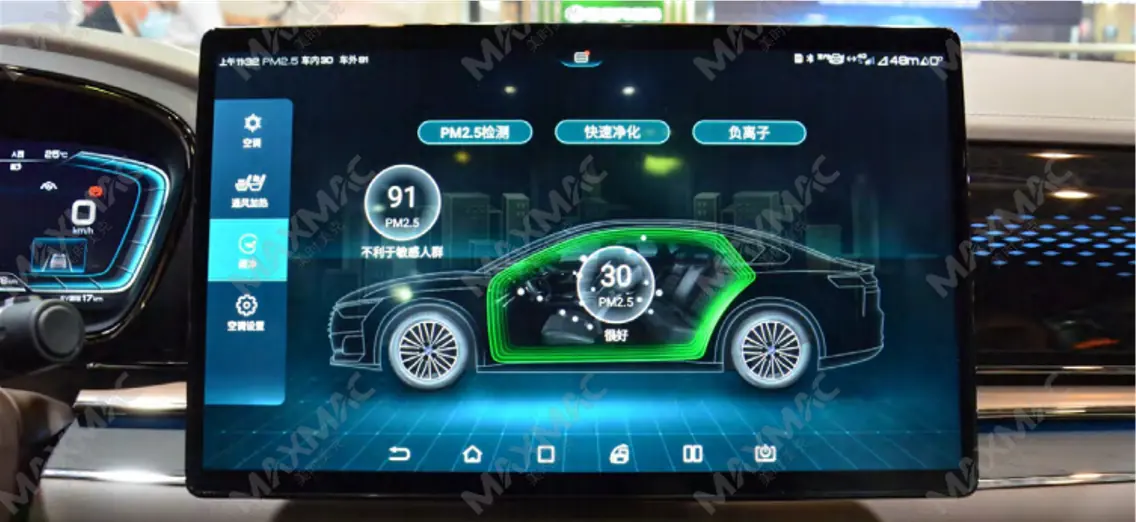
Automotive cockpit display using CO2 sensor module data for cabin ventilation control

AUTOMOTIVE OEM APPLICATION

How Our CO2 Sensor Module Supports Automotive OEMs

MAXMAC’s automotive CO2 sensor module provides reliable NDIR carbon dioxide measurements for intelligent cabin air management. Compact module options can be integrated into cockpit and HVAC systems to track CO2 buildup as passenger occupancy and ventilation conditions change, giving vehicle controllers accurate data for demand-based airflow control.

Real-time CO2 data helps the vehicle controller determine when to increase fresh-air intake, limit extended recirculation or alert occupants to poor cabin ventilation. Automotive OEMs can specify the measurement range, communication interface, connector, firmware logic and calibration strategy required by the vehicle program, simplifying integration while supporting occupant comfort and alertness.

OEM/ODM PRODUCT INTEGRATION

How Our CO2 Sensor Module Integrates into OEM/ODM Products

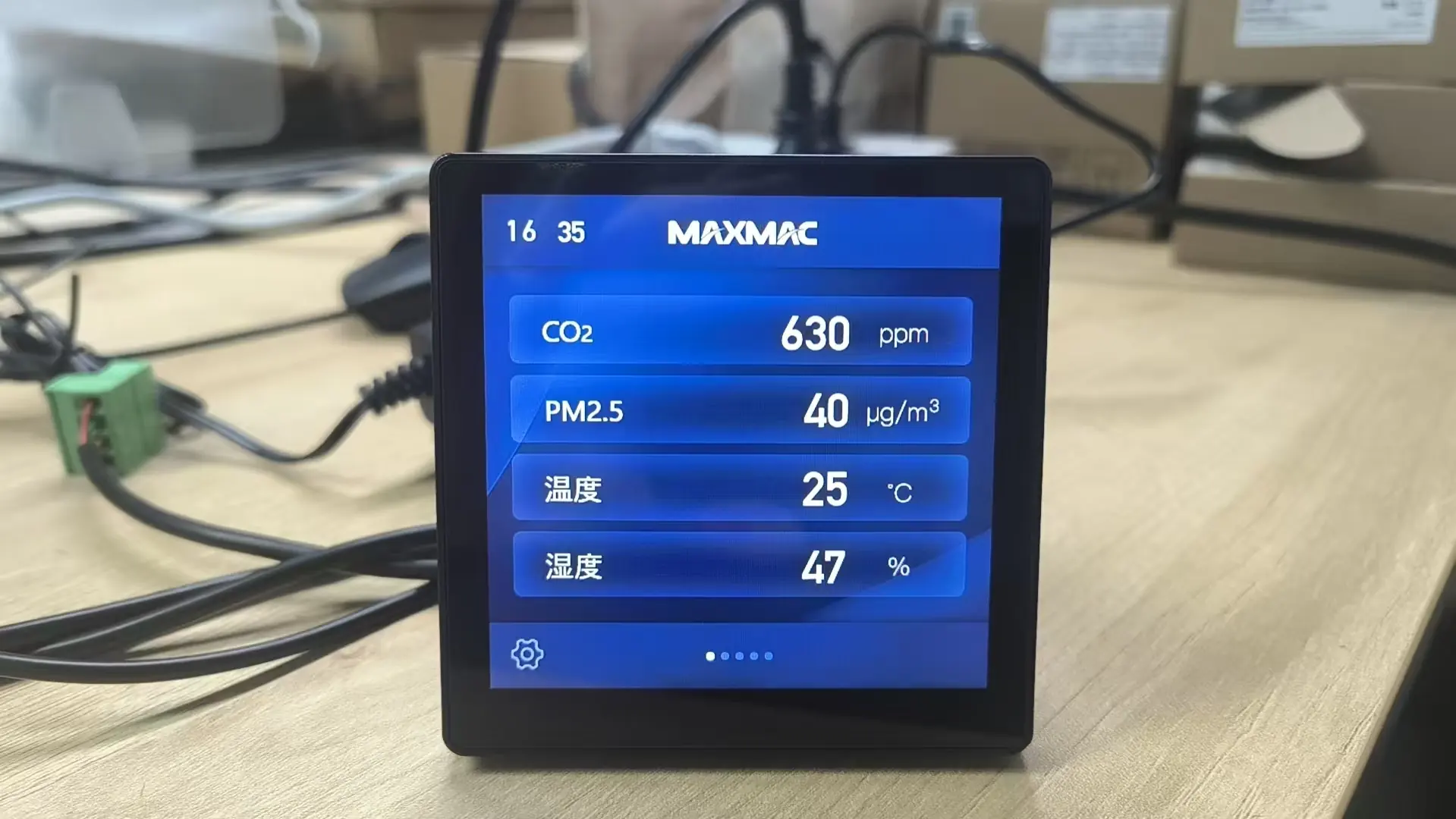
MAXMAC’s configurable CO2 sensor module can be embedded into HVAC controllers, indoor air quality panels, fresh-air equipment, air purifiers and connected environmental devices. Its compact NDIR architecture delivers calibrated CO2 concentration data for room-level monitoring and demand-controlled ventilation through an interface matched to the host product.

OEM/ODM customers can specify the measurement range, connector, pin definition, UART, I2C, PWM, RS485, CAN or LIN communication, firmware logic, alarm thresholds and calibration strategy. A ready-to-integrate CO2 sensor module simplifies PCB layout and host-controller development while enabling the final product to respond automatically to real-time carbon dioxide levels.

MAXMAC controller using CO2 sensor module data for HVAC and indoor ventilation management
FAQS

CO2 Sensor Modules FAQ

What affects the CO2 sensor price for B2B wholesale orders?

The wholesale CO2 sensor price depends mainly on purchasing volume, customized communication interfaces, and specific technical requirements, such as standard single-beam versus dual-beam systems. Please contact our sales team with your projected annual volume for a customized quotation.

Does this model feature an integrated circuits CO2 sensor module design?

Yes. Our high-performance series adopts an integrated circuits CO2 sensor module architecture. By integrating signal conditioning, temperature compensation, and the microcontroller onto a single high-quality PCB, we achieve higher stability, lower power consumption, and a smaller form factor for easy embedding.

Does your CO2 sensor module require manual calibrating sensors?

No. Simply provide your application environment and the key parameters that matter to your project. Our factory will perform application-specific calibration before shipment.

Each calibrated CO2 sensor module integrates advanced ABC (Automatic Baseline Calibration) technology, eliminating the need for manual recalibration or calibrating sensors during subsequent use and enabling up to 15 years of maintenance-free operation. This removes time-consuming field maintenance and can significantly reduce your product's after-sales operating costs.

What is the measurement range of your CO2 sensor module, and does it support custom calibration?

Our standard CO2 sensor module provides a measurement range of 400–10,000 ppm with resolution as fine as 1 ppm, making it well suited to monitoring common CO2 sensor ppm changes.

For specialized applications requiring very low concentrations, such as automotive cabins, or much higher concentrations, such as industrial facilities and agricultural greenhouses operating at 2–5% Vol, we support customized measurement ranges. Contact our technical team for an application-specific solution.

What are the operating environment limits (temperature and humidity) for this NDIR CO2 sensor?

This high-performance NDIR CO2 sensor operates from 0°C to 50°C and withstands storage temperatures from -30°C to 70°C. Its operating humidity range is 5–95% RH, non-condensing, with a maximum dew point of 40°C.

This resistance to humidity and temperature drift supports stable deployment in HVAC equipment, smart-home products, humid agricultural greenhouses, and other demanding environments.

What are the power consumption and communication interface specifications for integration?

Low power consumption and sleep mode: The operating voltage is 4.5–6.5 VDC. Average current is only 15 mA, with a 300 mA peak lasting less than 10 ms. Sleep mode can be enabled through the software protocol, reducing sleep current to less than 100 µA and significantly lowering total system power consumption.

Flexible communication interfaces: The module provides UART communication compatible with the Modbus protocol, can be readily expanded to RS485 through hardware, and includes PWM output to simplify software and hardware integration.

RELATED RESOURCES

Related CO2 Sensor Resources

View All
NDIR CO2 sensor infrared absorption and concentration measurement principle
NDIR Fundamentals

How Does a CO2 Sensor Work?

Explore how NDIR sensors use wavelength-specific infrared absorption to measure carbon dioxide concentration accurately for HVAC, fresh-air, automotive, industrial, and environmental monitoring systems.

Read Article

Provide Your Details for Professional Product Consultation

Our product experts will provide the most suitable air solutions and product recommendations.