PM2.5
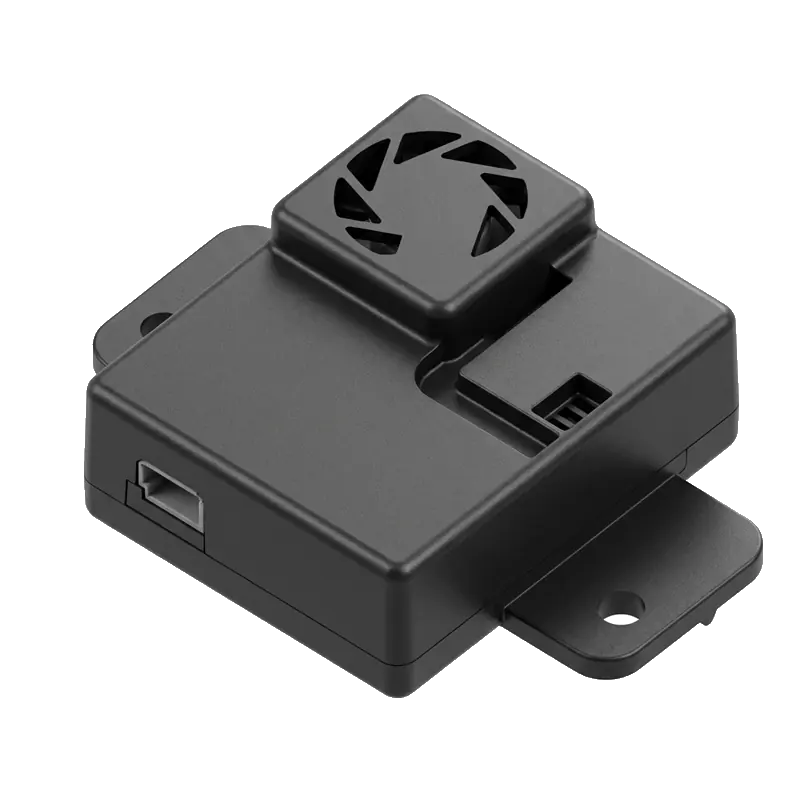
PM2.5 Sensor P11
Automotive-grade PM2.5 sensing with fast response, stable output and consistent performance for cabin air quality and purification systems.
Automotive-GradeRead more
PARTICULATE MATTER SENSOR
MAXMAC provides highly reliable particulate matter sensor solutions and flexible, customizable PM sensor products for OEM customers worldwide, including HVAC system manufacturers, smart home integrators, and automotive air quality control applications. Our production processes are strictly certified to ISO 9001 and IATF 16949 quality management standards. Our CNAS-accredited national laboratory also provides comprehensive particulate concentration simulation and environmental testing, with 3 m³, 5 m³, and 15 m³ test chambers that reproduce the full range of potential PM sensor application environments.
Our high-performance particulate sensors are supported by complete OEM/ODM services, from rapid early-stage prototyping through high-volume production, helping ensure that every particulate matter PM sensor operates reliably over the long term in changing application environments.
PRODUCT CATALOG
Automotive-grade PM2.5 sensing with fast response, stable output and consistent performance for cabin air quality and purification systems.
Automotive-GradeRead more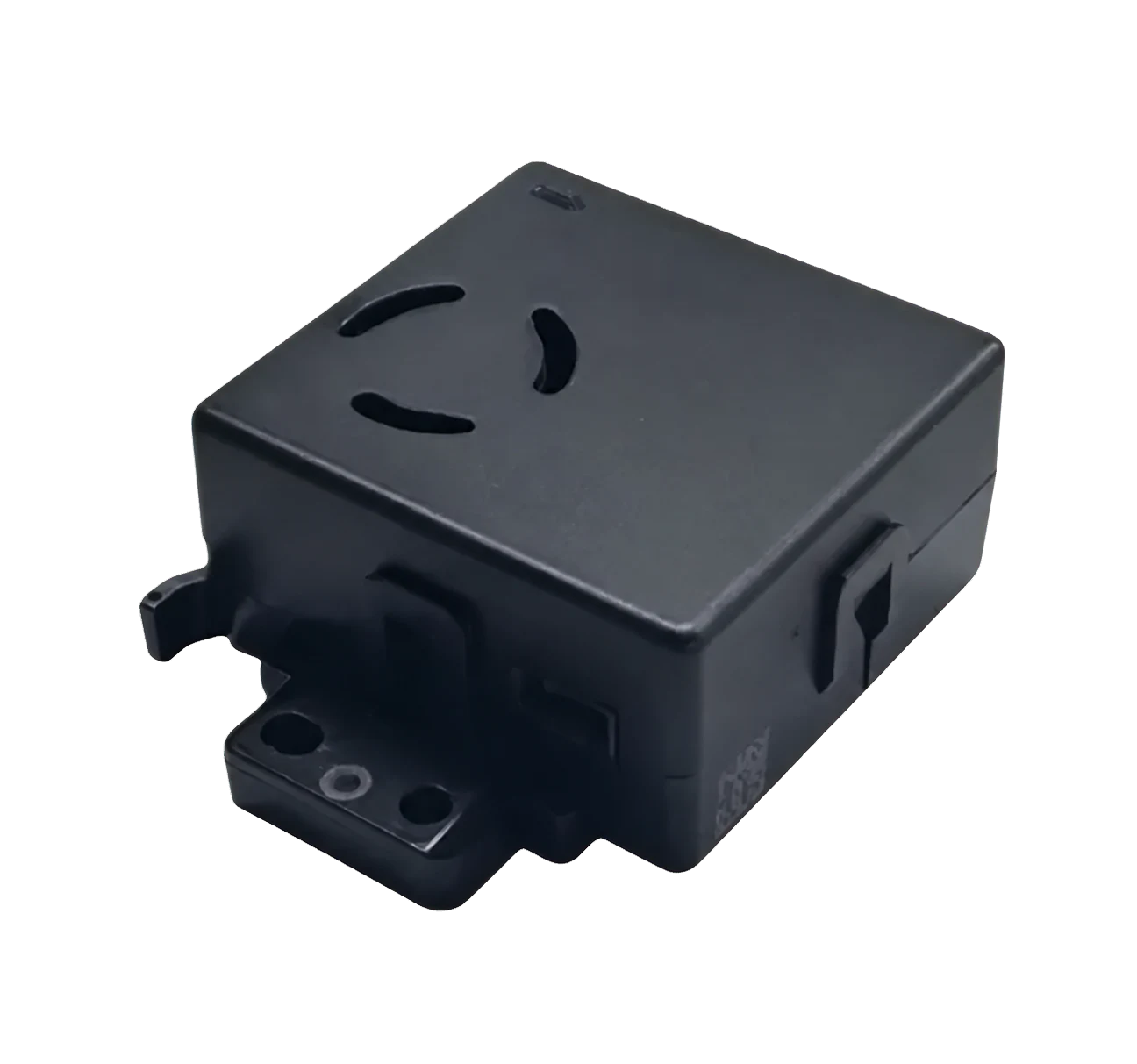
Compact automotive-grade PM2.5 sensor designed for space-constrained vehicle systems and reliable long-term in-cabin operation.
Automotive-GradeRead more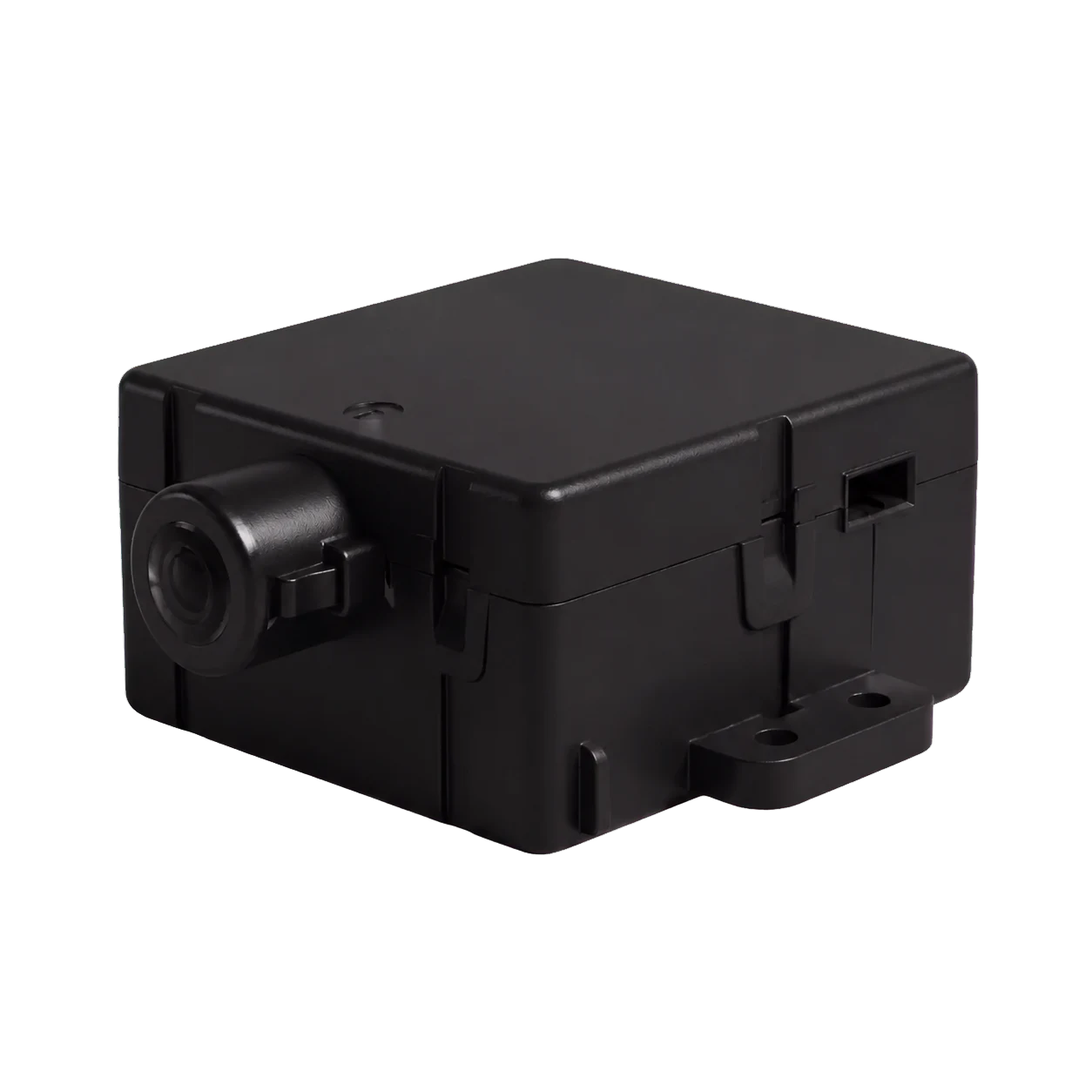
Automotive-grade single-channel particle detection for accurate, stable air quality data in intelligent cockpit and HVAC systems.
Automotive-GradeRead more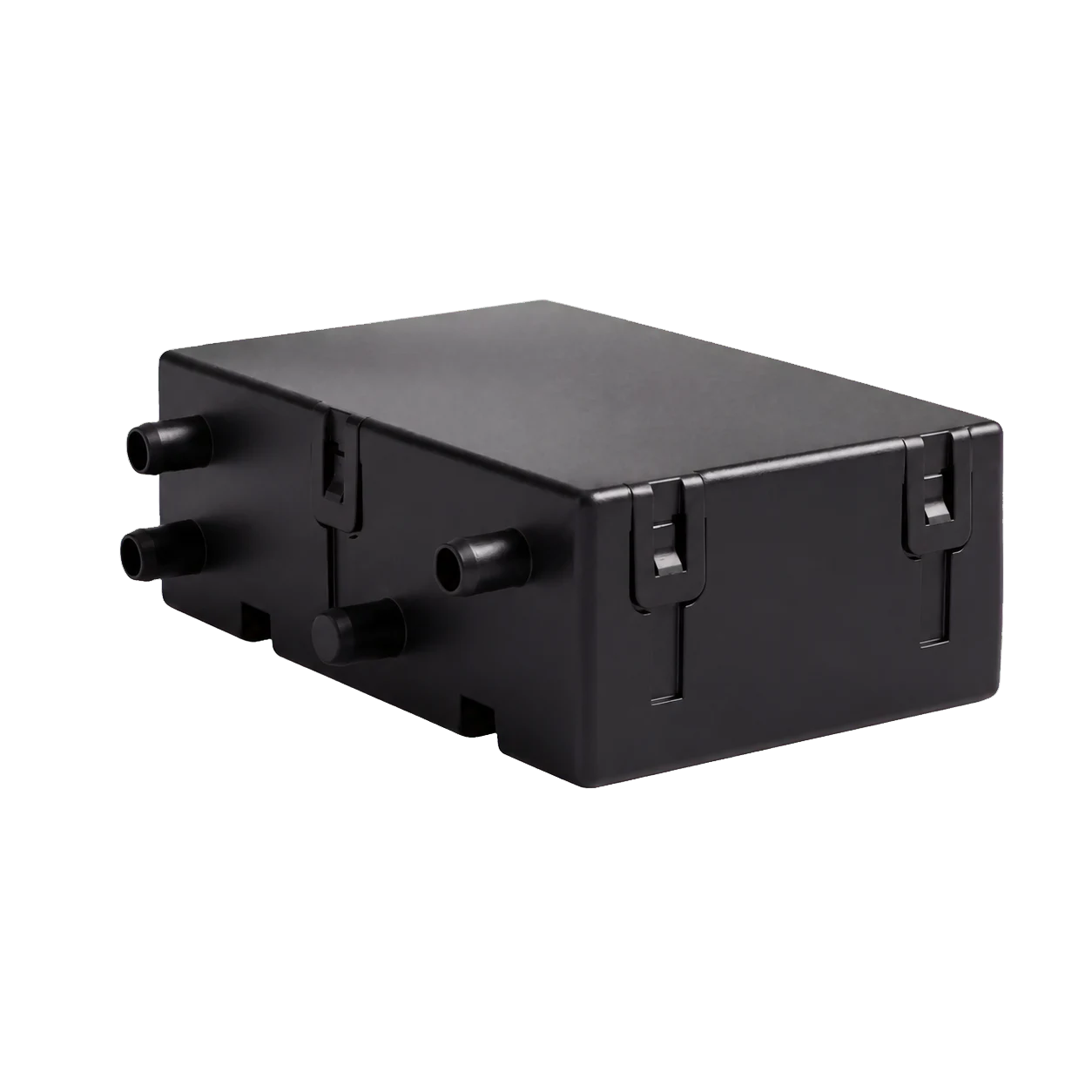
Dual-channel automotive PM2.5 module with standard harness support for full-vehicle integration and cabin purification control.
Automotive-GradeRead more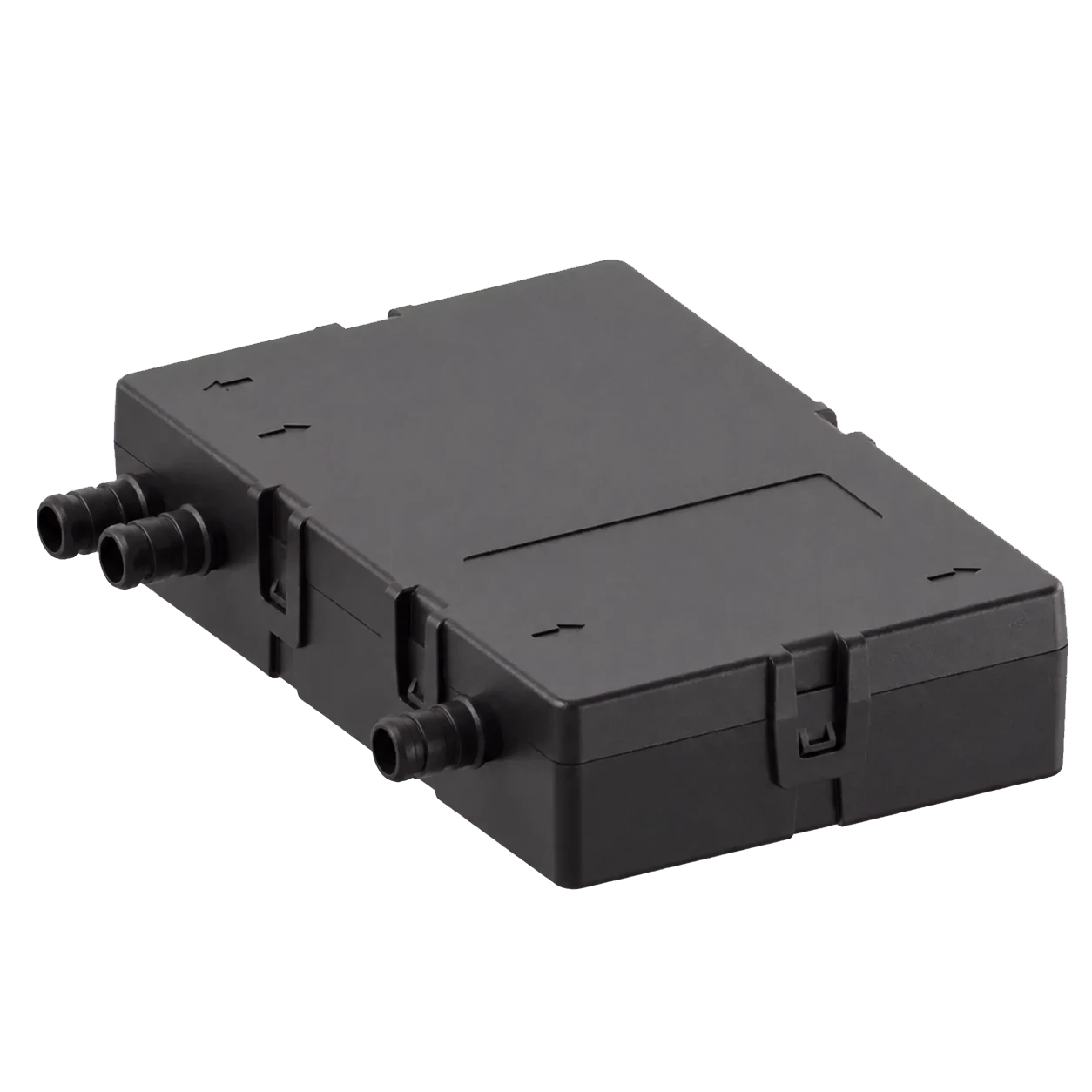
Automotive-grade dual-channel architecture for enhanced measurement stability and consistency in demanding air quality applications.
Automotive-GradeRead more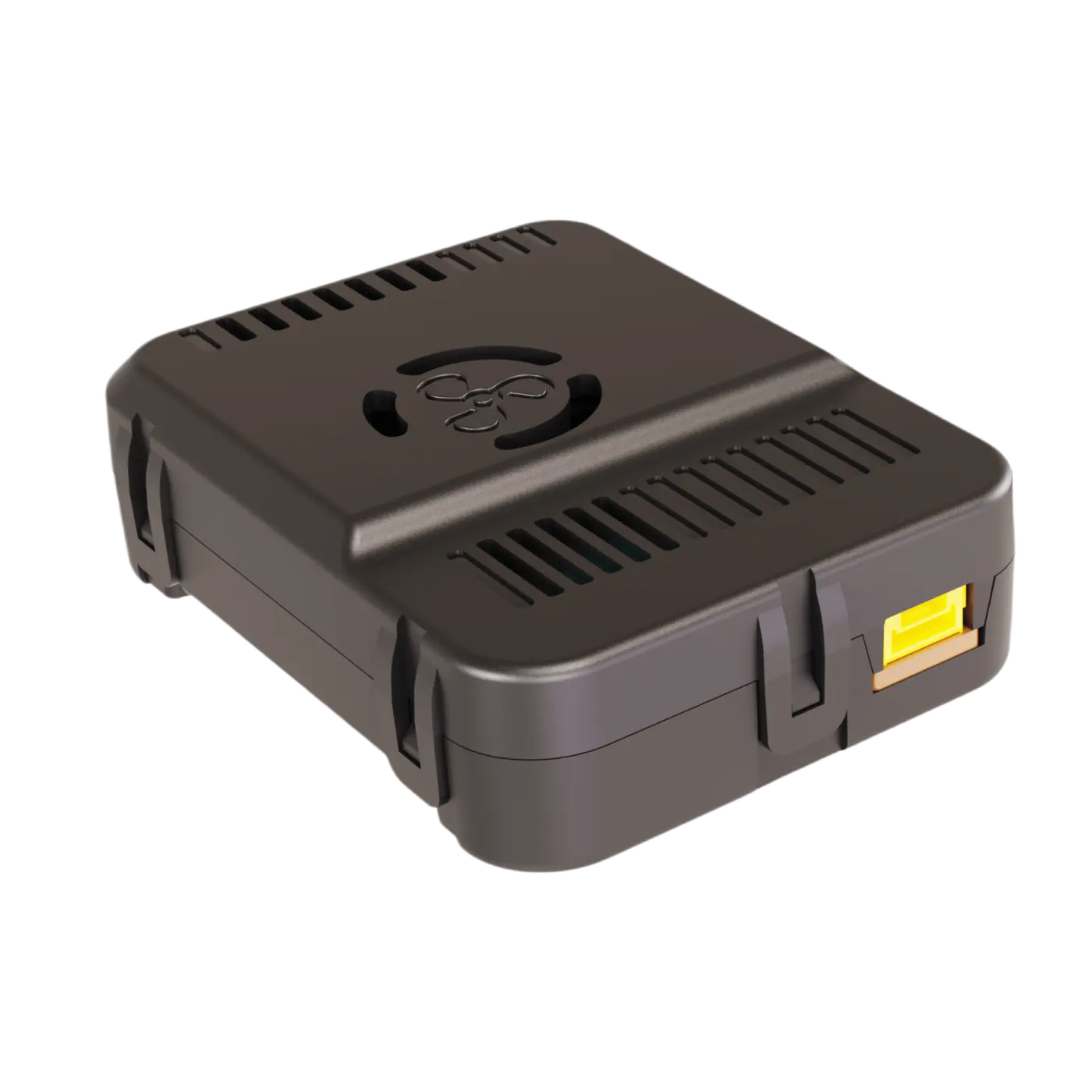
Complete IAQ sensing platform integrating PM2.5, CO2, TVOC, temperature and humidity for fresh-air units, AHU systems and smart ventilation control.
Read moreDedicated particulate sensing node for ventilation cleanliness, filter-performance evaluation and indoor air quality monitoring.
Read moreEfficient PM2.5, temperature and humidity sensing for particulate monitoring, ventilation systems and indoor comfort management.
Read moreBalanced PM2.5, CO2, temperature and humidity sensing for fresh-air units, AHU equipment and commercial HVAC control.
Read more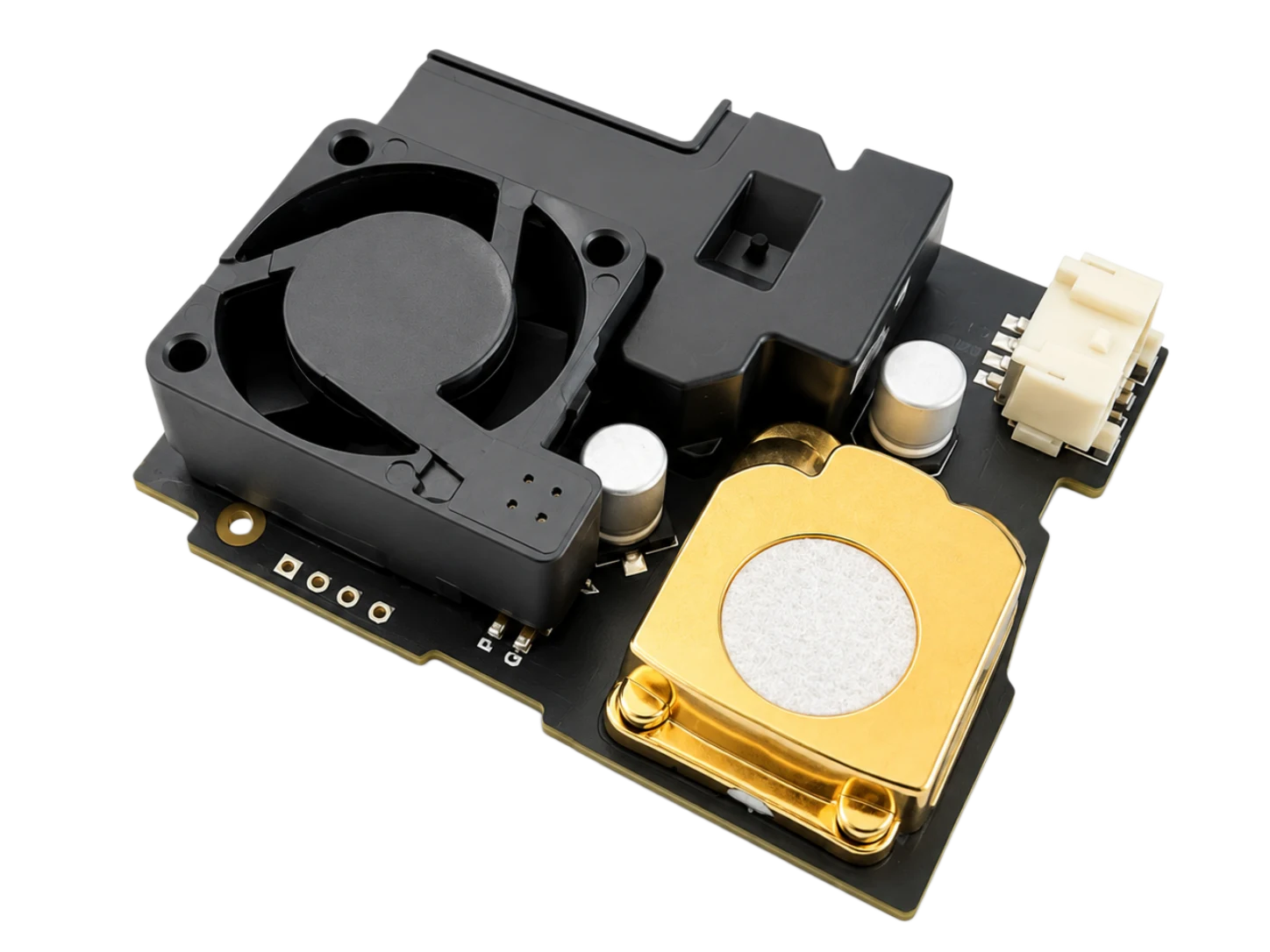
Integrated PM, CO2, temperature, humidity and optional AQS/TVOC sensing with customizable interfaces and relay control.
Read more
Dual PM sensing supports cabin and outside air comparison, while CO2 and AQS data support intelligent ventilation and recirculation control.
Automotive-GradeRead more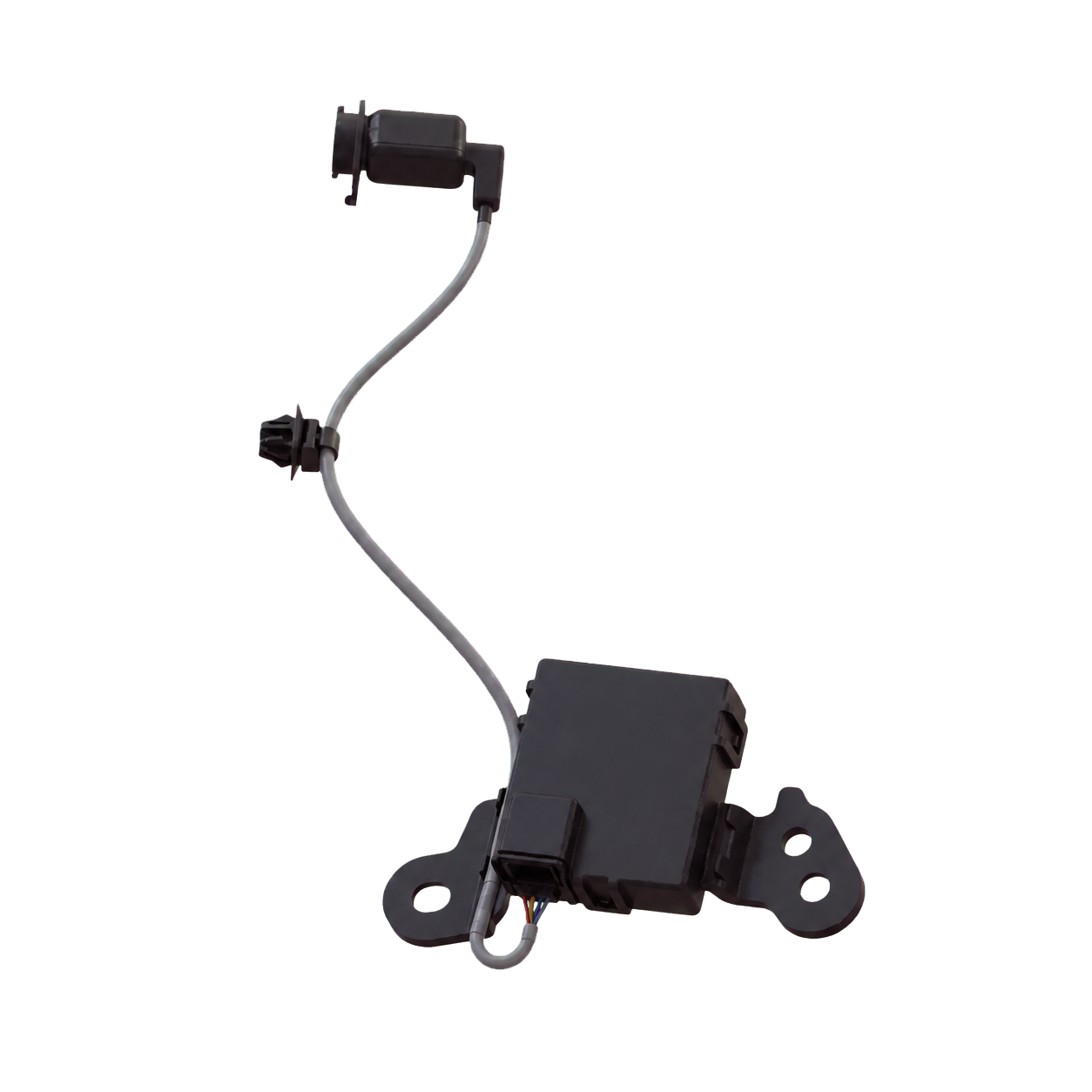
Compact multi-in-one sensing for comprehensive cabin air quality monitoring and simplified automotive HVAC integration.
Automotive-GradeRead more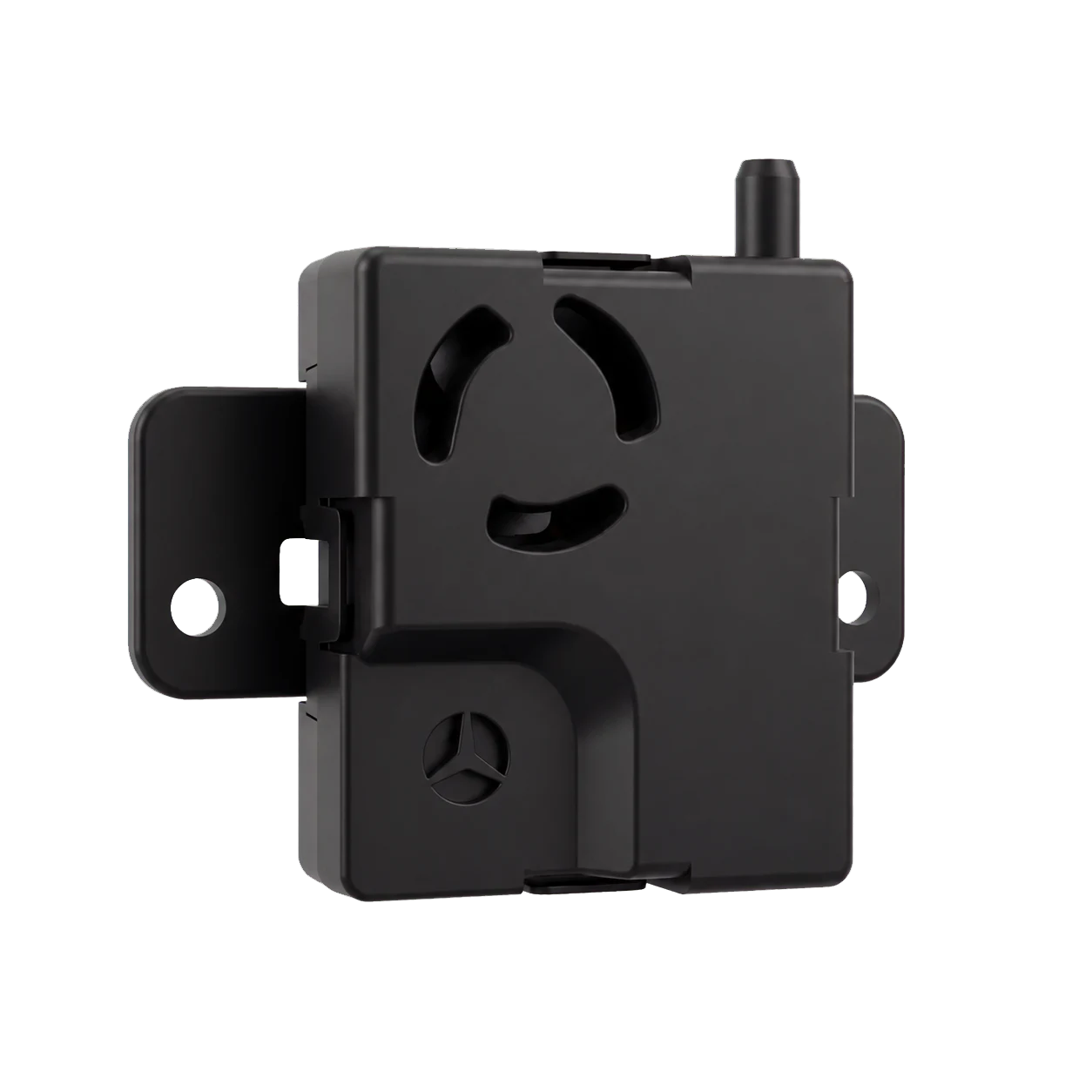
Integrated PM, CO2 and NTC temperature sensing for cabin air quality assessment and temperature-linked HVAC control.
Automotive-GradeRead moreTECHNICAL DATA

TECHNICAL INSIGHTS
MAXMAC’s laser PM2.5 sensor, engineered for pm2 5 sensor applications, uses the industry-leading Laser Scattering Method to measure airborne particulate matter in real time with exceptional precision. Its core photoelectric conversion and measurement process follows four tightly controlled stages:
Active Sampling: A high-performance constant-flow Fan integrated at the base of the sensor generates stable negative pressure through the Air Outlet. Compared with passive-convection dust sensors, active sampling keeps the test air moving continuously and at a uniform velocity through the internal optical detection chamber.
Laser Excitation: An imported semiconductor Laser Diode emits a highly parallel, collimated Laser Beam. When suspended Dust Particles in the sampled air pass through the beam, they produce instantaneous light scattering.
Optical Processing: A precision Lens focuses the scattered light onto a high-sensitivity Photodiode, which converts it into a weak electrical signal. At the same time, an integrated Light Trap absorbs unscattered direct laser light, effectively eliminating interference from background stray light.
DSP Signal Processing: The collected photoelectric signal passes through a high-speed Photoelectric Signal Processing circuit for multi-stage filtering and amplification. A proprietary MCU algorithm then converts the pulse signal into a highly accurate digital AD Signal Output in real time.
Through this high-precision photoelectric architecture, our PM2.5 air quality sensor supports real-time calculation of suspended-particle mass concentration in µg/m³. It also provides dependable sensing data for pm2 5 monitors and can serve as a reliable air purity sensor in air purifiers, HVAC equipment, automotive cabins, and indoor air quality systems.
CALIBRATION & VALIDATION


Every sensor undergoes two separate calibration stages to ensure maximum accuracy and consistency. During production, each sensor module is calibrated to establish its baseline calibration curve. After the module has been integrated into the fully assembled unit, the complete system is calibrated again before shipment. This module-level and final system-level calibration process compensates for variations introduced during assembly and helps ensure reliable, consistent long-term performance in the finished product.
Our factory implements a rigorous multi-point gas calibration technique for superior precision. We utilize over 100 continuous, tightly controlled concentration points during a smooth, descending gas flow process. This high-density calibration maps the entire specified measurement range, ensuring the sensor accurately recognizes every microscopic change in gas volume. This comprehensive methodology eliminates non-linear errors, delivering market-leading full-scale accuracy and perfect curve consistency.
To eliminate performance risks, we conduct rigorous environmental reliability testing using advanced chambers that simulate extreme temperature and high-humidity environments. We enforce a strict pilot production validation phase: mass production is initiated only after sensors consistently pass these harsh environmental stress tests. By addressing temperature drift and cross-sensitivity in the early stages, we help engineers resolve critical environmental interference issues during their initial design phase, ensuring robust and stable real-world deployment.
To ensure long-term durability and facilitate maintenance-free operation for our clients, we subject the first batch of pilot production to a rigorous 1-week (168-hour) continuous burn-in test. This intensive aging test process is designed to eliminate early-life sensor drift and stabilize electrochemical reactions. By proactively aging the sensors under load, we guarantee exceptional long-term stability and prevent field failures, significantly reducing post-installation maintenance overhead and total cost of ownership (TCO).

LASER MODULE CALIBRATION
MAXMAC develops and manufactures the laser heads used in our PM2.5 sensor modules in-house. Each laser module is individually calibrated with our proprietary calibration algorithms to control optical output intensity, beam characteristics, and photoelectric response within tightly defined limits.
This integrated manufacturing and calibration process minimizes module-to-module variation and ensures a high level of consistency across every laser head before sensor assembly. By controlling performance at the optical source, we further improve the measurement consistency, long-term stability, and production repeatability of every finished MAXMAC PM2.5 sensor.
CUSTOMIZABLE PM SENSOR PLATFORM
Built on MAXMAC’s configurable IAQ multi-sensor platform, your PM sensor can be developed as a dedicated particulate matter module or combined with multiple air quality measurements in one compact assembly. PM1.0, PM2.5 and PM10 detection can be integrated with CO₂, AQS/TVOC, temperature and humidity according to your product requirements.
Multiple measurements are consolidated through one data interface, simplifying wiring, PCB layout, firmware development and final product integration. OEM customers can also specify whether relay control is required and customize the communication method, connector, firmware logic, calibration strategy, data format, PCB dimensions and mechanical structure.
Choose the particle-size outputs, measurement range, airflow design and calibration required by your application.
Add high-accuracy temperature and humidity data for environmental monitoring and sensor compensation.
Transmit all measurements through UART, I²C, PWM, analog voltage, RS485, CAN, LIN or a custom protocol.
Integrate calibrated NDIR CO₂ measurement into the same compact sensor module and unified data output.
Add AQS or TVOC sensing for odor, pollution-gas and indoor air quality control applications.
Relay control can be added or omitted to match the customer’s control strategy and PCB design.
Combine PM1.0, PM2.5, PM10, CO₂, AQS/TVOC, temperature and humidity functions according to product positioning and installation space.
One connector can transmit multiple sensor outputs, reducing wiring, controller inputs and integration complexity.
Customize relay control, communication protocol, connector, PCB dimensions, firmware logic, calibration and output format.
MANUFACTURING CAPABILITIES
As a professional Smart Sensor manufacturer, MAXMAC operates its own SMT production area with comprehensive PCB assembly and inspection capabilities. Key processes are completed in-house, including electronic component placement, reflow soldering, AOI inspection, firmware programming and functional testing. This integrated capability accelerates prototyping, pilot production and product iteration while supporting OEM/ODM customization of each air quality sensor module, including sensing combinations, interfaces, PCB dimensions, connectors and firmware logic.


MAXMAC combines automated production lines with flexible manual assembly to match different IAQ product structures, order volumes and customization requirements. Automated equipment protects consistency and delivery efficiency in volume production, while skilled workstations support complex assembly, pilot runs and customized air quality sensor module configurations.
Every production stage is connected to our MES system, enabling full traceability across material batches, PCB assembly, sensor calibration, firmware programming and finished-product inspection. This complete manufacturing data trail gives OEM/ODM customers dependable quality assurance and supports reliable volume delivery from an experienced Smart Sensor manufacturer.
TESTING & VALIDATION
MAXMAC’s CNAS-accredited laboratory brings product verification closer to our engineering and manufacturing teams, significantly shortening validation cycles and accelerating the transition from design to volume production. By identifying design weaknesses, potential failure modes, and risk-control points at an early stage, our laboratory capabilities help prevent issues before they reach customers or enter mass production.
Comprehensive mechanical, electrical, environmental, gas, and microbiological testing enables us to verify product performance under demanding operating conditions. This evidence-based validation process strengthens product stability, long-term reliability, and quality consistency while giving OEM/ODM customers greater confidence throughout development and delivery.


TARGET APPLICATIONS

In modern building automation and energy-efficient fresh-air control, a pm2 5 air quality sensor has become standard equipment for green, healthy buildings. When a laser-based pm sensor is integrated into a fresh-air or HVAC system, connected pm2 5 monitors can track particulate concentrations in every zone in real time. If indoor PM2.5 exceeds the configured threshold, the system can automatically activate purification equipment or increase the fresh-air volume, protecting indoor air cleanliness while significantly optimizing equipment energy consumption.

We provide a highly adaptable solution for teams seeking the best pm2 5 sensor for smart-home ecosystems. Our modules support integration with open-source platforms and mainstream protocols, including pm2 5 sensor Home Assistant deployments. With exceptionally low operating noise, a compact footprint, and the fast response required from an air purity sensor, the module is an ideal choice for early hardware Spec-in and product design in air purifiers, fresh-air systems, and desktop smart air-quality monitors.

Smart-city management and environmental monitoring demand rigorous measurement of fine particles in ambient air. For these applications, we developed a highly weather-resistant outdoor pm2 5 sensor module. Whether deployed in a remote weather station or an outdoor particulate matter detector, it continues to provide high-accuracy, highly consistent data under demanding conditions that include prolonged sun exposure, rain, wind, and airborne dust.

In an intelligent vehicle cabin, automatic switching between recirculated and fresh-air modes depends on precise gas and particle detection. MAXMAC developed a dual-channel particulate matter sensor specifically for this task, independently monitoring fine-particle concentrations inside and outside the vehicle in real time. As a Tier 1 supplier to more than 30 automotive OEMs, we bring extensive automotive-grade integration experience to every program. Our in-vehicle laser pm sensor has passed demanding IATF 16949 and ISO 16750 reliability validation, operates across a broad −30°C to 70°C temperature range, withstands long-term vehicle vibration, and interfaces seamlessly with the vehicle air-conditioning electronic control unit.
AUTOMOTIVE OEM APPLICATION
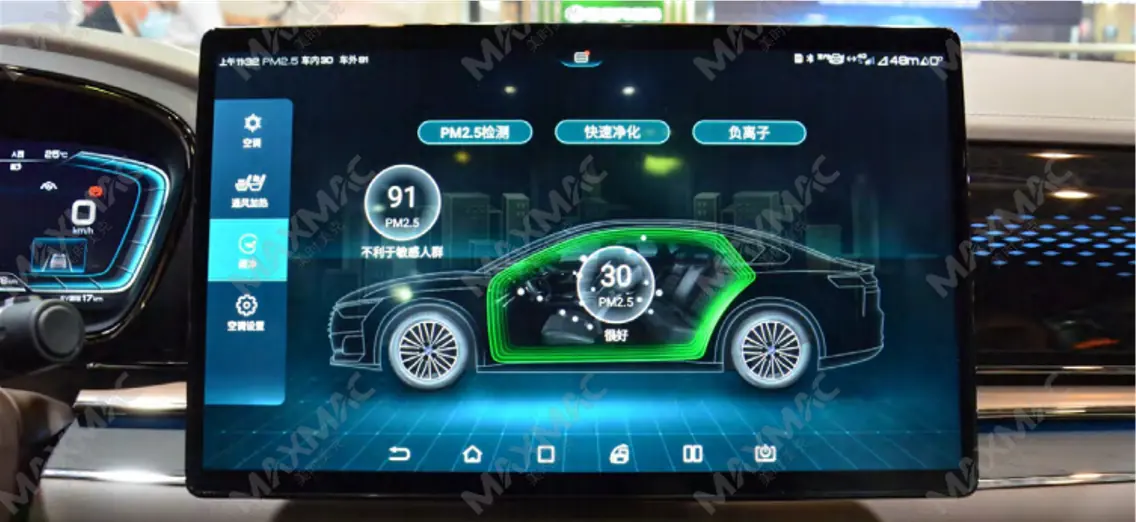
MAXMAC P0906 and P11 particulate matter sensors are deployed across BYD’s Dynasty, Formula Leopard and Denza vehicle lines, supporting comprehensive in-cabin air quality management. Through a LIN-to-CAN communication architecture, the sensor modules connect with the vehicle’s central control system and continuously transmit real-time PM2.5 measurements from both inside and outside the cabin.
Check more automotive PM sensor applications
These dual-channel particle measurements provide a key control input for the automotive HVAC system. By comparing interior and exterior PM2.5 levels, the climate-control system can determine when to switch between fresh-air intake and recirculation modes, helping reduce pollutant ingress and providing reliable data support for intelligent cabin air management.
OEM/ODM PRODUCT INTEGRATION
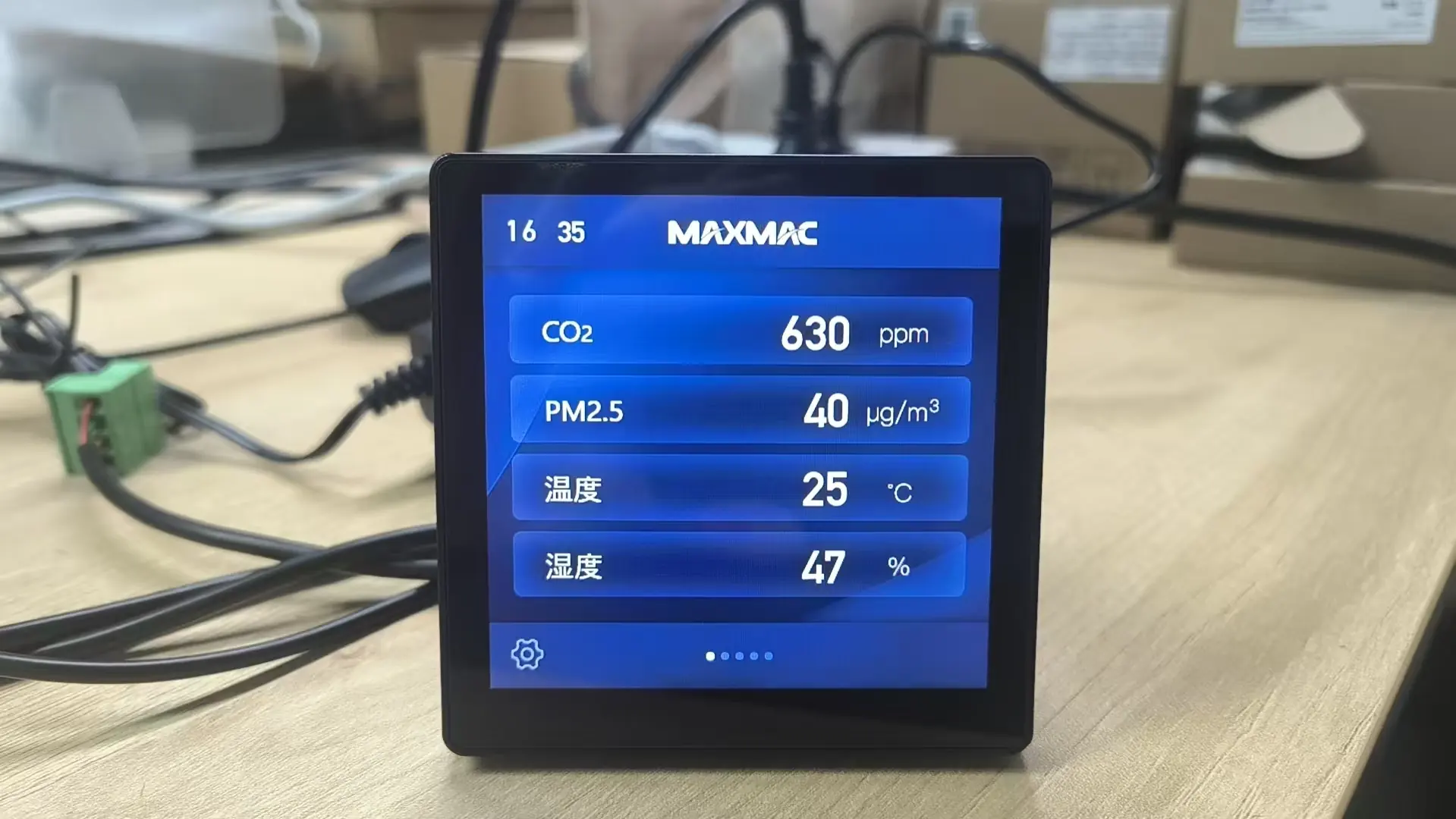
MAXMAC PM sensors can be integrated into our multi-in-one sensor platform and connected to end-use equipment through an RS485 interface. One practical example is our self-developed HVAC thermostat, which incorporates the sensor module directly into the controller. The finished device can manage air conditioning, fresh-air ventilation and underfloor heating while simultaneously operating as a real-time indoor air quality monitor.
This thermostat is one example of how our sensing technology can become part of a complete customer product. MAXMAC can integrate PM and multi-parameter sensor modules into virtually any OEM/ODM device, including air purifiers, thermostats, outdoor monitoring equipment and other connected environmental-control products. Sensor combinations, communication interfaces, enclosure structure, firmware logic and data output can all be adapted to the target equipment.
In simple terms, a particulate matter sensor measures and quantifies the real-time mass concentration of airborne particles such as PM2.5, PM10, fine dust, smoke, and pollen. Our high-performance sensors direct a high-energy laser through the sampled airflow and measure the intensity of light scattered by each particle. An integrated photoelectric processing chip then converts these optical signals into precise digital outputs, such as mass concentration in µg/m³ or particle count per liter of air. Fresh-air systems, air purifiers, and intelligent vehicle cabins can use this data to respond automatically as environmental conditions change.
How to test for particulate matter in air depends on the application and the required level of accuracy.
Industrial and laboratory calibration: Gravimetric analysis, based on precision filter weighing, and beta attenuation methods provide very high accuracy. However, the equipment is expensive, physically large, and generally unsuitable for embedded product design.
Embedded systems and product-selection testing: A highly integrated sensor based on the Laser Scattering Method provides continuous data in seconds. Connect the module to an MCU or PLC through a UART (TTL) or PWM interface to begin collecting accurate particle measurements.
Before mass production, we recommend testing the fully assembled device in a standardized dust chamber and comparing its output with a professional reference instrument such as a TSI particle monitor.
During long-term operation, especially in harsh environments or air with high dust concentrations, common particulate matter sensor problems include dust-accumulation drift, a stalled fan, and optical-path aging.
A constant zero reading or no response to changing air quality: Dust may have accumulated around the active-sampling fan and restricted airflow through the optical chamber.
An abnormally high reading that does not return to baseline: Deposits on the optical lens or laser-diode window may create unwanted reflections that the sensor interprets as a high particle concentration.
These particulate matter sensor symptoms should be evaluated together with airflow, fan operation, contamination history, and communication status before the sensor is replaced.
Several factors determine the B2B particulate matter sensor price. Procurement and engineering teams should evaluate the following three areas when requesting the most cost-effective quotation.
Order volume and estimated annual usage (EAU): As a direct manufacturer, MAXMAC offers competitive tiered pricing for long-term, high-volume orders.
Calibration and consistency requirements: Automotive-grade IATF 16949 dual-channel calibration requires different environmental-chamber aging tests and calibration time than a standard residential-grade product, directly affecting unit cost.
Customization: Pricing may also reflect a custom connector, interface protocol such as Modbus RS485, wiring harness, mounting structure, or specialized dust-protection design.
Yes. During the early Spec-in stage of product development, MAXMAC provides flexible hardware customization to accommodate each customer's available installation space and interface standards.
Interface customization: We can customize the connector type, pin assignment, and wire harness.
Mechanical and enclosure customization: Mounting holes, airflow guides, housing geometry, and dust-filter structures can be adapted to the internal space of your equipment.
Communication-protocol customization: We support special UART register definitions and can extend the digital output to an industrial Modbus RS485 interface.
We maintain batch-to-batch consistency and reliable supply through a complete industrial and automotive-grade quality system.
Quality-system control: Our production base operates under ISO 9001 and IATF 16949 quality-management systems. Every outgoing sensor undergoes controlled online calibration and aging tests.
Automated modular calibration: Fully automated multi-point calibration and inspection lines generate an individual test curve for every sensor before shipment, providing complete data traceability.
Supply-chain and lifecycle assurance: We maintain long-term strategic relationships with established semiconductor and optical-component suppliers. For sensor models selected through a customer's Spec-in process, we support more than 10 years of stable supply and provide advance end-of-life (EOL) notification to protect the full project lifecycle.
The pm2 5 sensor meaning refers to a sensing device designed specifically to detect fine airborne particulate matter with an aerodynamic equivalent diameter of 2.5 micrometers (µm) or less. Within the Air Quality Index (AQI), PM2.5 is one of the most important indicators of air cleanliness because these extremely small particles can penetrate deep into the respiratory system.
Our PM2.5 sensor measures the mass concentration of this fine dust in µg/m³ and supplies digital data to fresh-air HVAC systems, air purifiers, and intelligent vehicle cabins. This converts otherwise invisible particle pollution into a clear, actionable air-quality rating such as good, moderate, or unhealthy.
Learn how PM2.5 sensors support independent cabin and outside-air monitoring, automatic recirculation control, purifier activation, and cabin-filter life evaluation.
Explore room-level air-quality monitoring, HVAC linkage, fresh-air coordination, and closed-loop control using integrated air-sensor data.
Review PM, CO2, temperature, humidity, and gas-sensor integration, including system connection, component selection, and calibration challenges.
Compare environmental demands, calibration, interfaces, validation priorities, and PM data use across automotive and industrial sensing projects.
Our product experts will provide the most suitable air solutions and product recommendations.