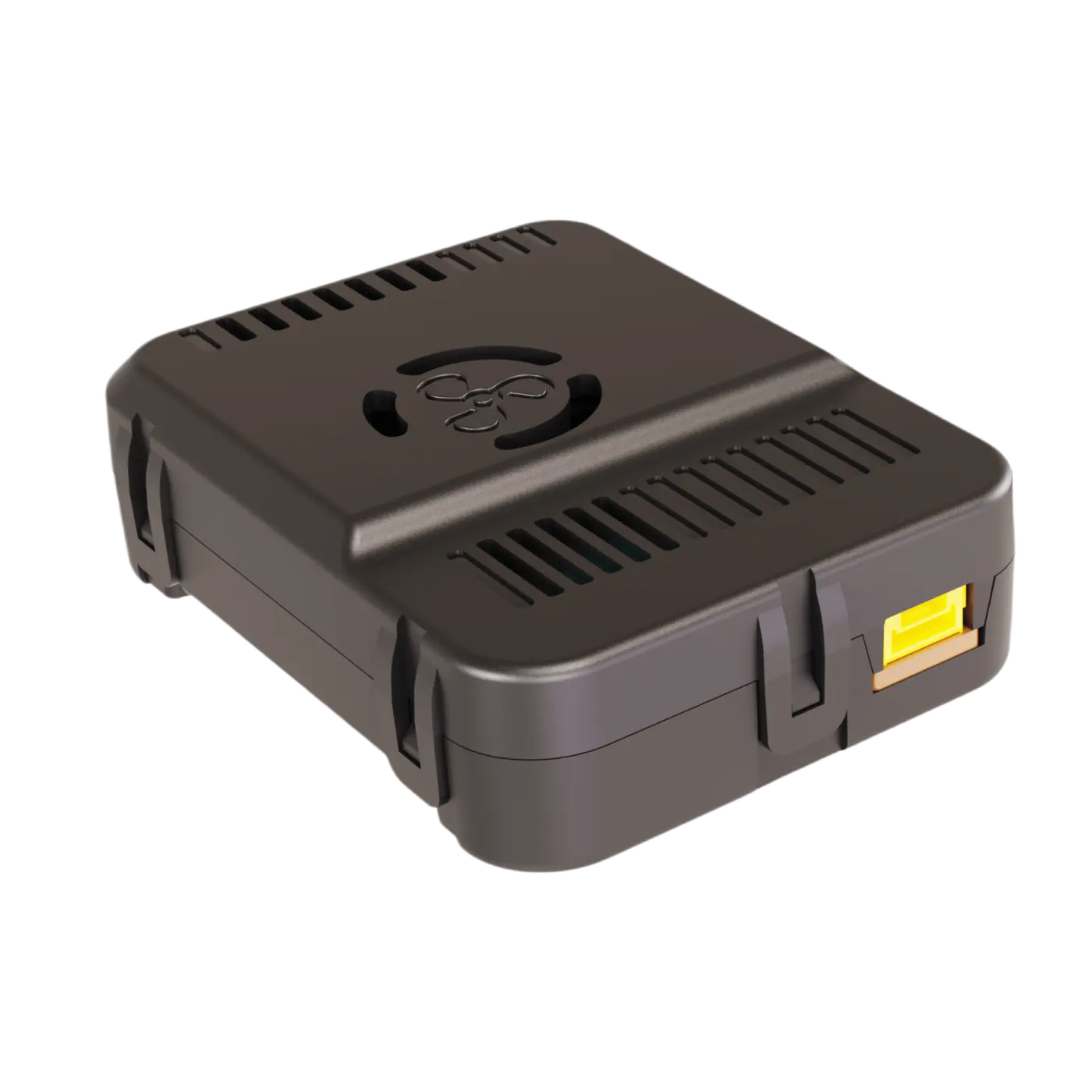
T/H
A54-25 Temperature and Humidity Sensor
Dedicated temperature and relative humidity sensing for HVAC environmental monitoring, ventilation control and indoor comfort management.
Read more
TEMPERATURE AND HUMIDITY SENSOR
As a professional B2B source manufacturer of gas and environmental sensors in China, MAXMAC specializes in the research, development and manufacture of industrial-grade and automotive-grade temperature and humidity sensor products, embedded humidity sensor module solutions, and multi-in-one air quality sensor platforms with integrated temperature and humidity sensing. Our production standards strictly comply with ISO 9001 and IATF 16949 management systems, while our CNAS-accredited national laboratory supports temperature and humidity environmental simulation, aging, drift validation, and outgoing consistency testing.
Our end-to-end OEM/ODM capabilities extend from PCB sensor board integration and enclosure packaging for standalone digital temperature sensor products to complete end-device development, helping global HVAC, smart home and automotive system integrators deploy high-accuracy temperature humidity sensor systems.
PRODUCT CATALOG
Dedicated temperature and relative humidity sensing for HVAC environmental monitoring, ventilation control and indoor comfort management.
Read moreEfficient PM2.5, temperature and humidity sensing for particulate monitoring, ventilation systems and indoor comfort management.
Read moreBalanced PM2.5, CO2, temperature and humidity sensing for fresh-air units, AHU equipment and commercial HVAC control.
Read moreFocused on HVAC applications, this 5-in-1 temperature air sensor measures PM2.5, CO2, TVOC, temperature and humidity to provide a complete IAQ solution.
Read more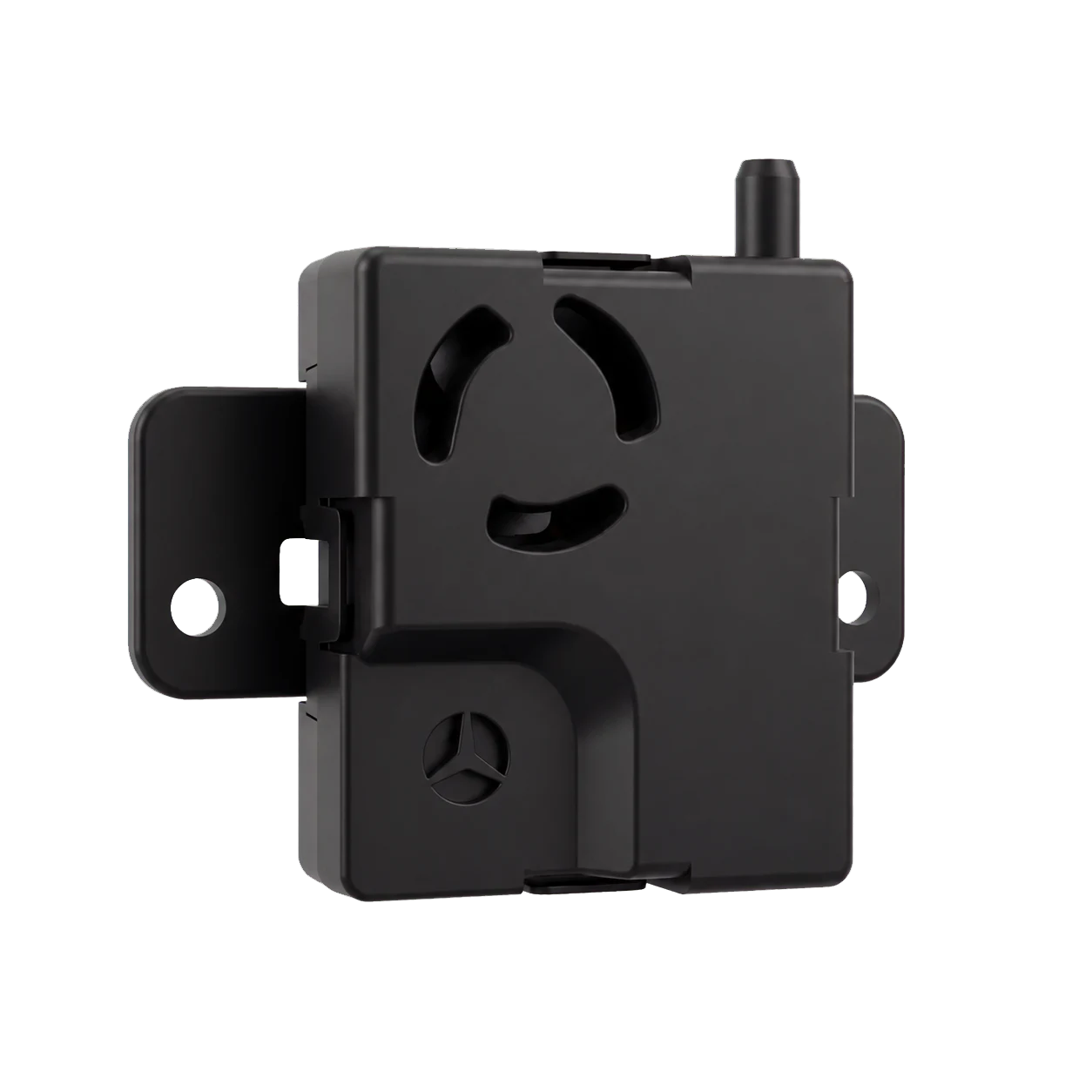
This automotive-grade temperature sensor module integrates PM, CO2 and humidity sensing for cabin defogging, environmental monitoring and coordinated HVAC control.
Automotive-GradeRead more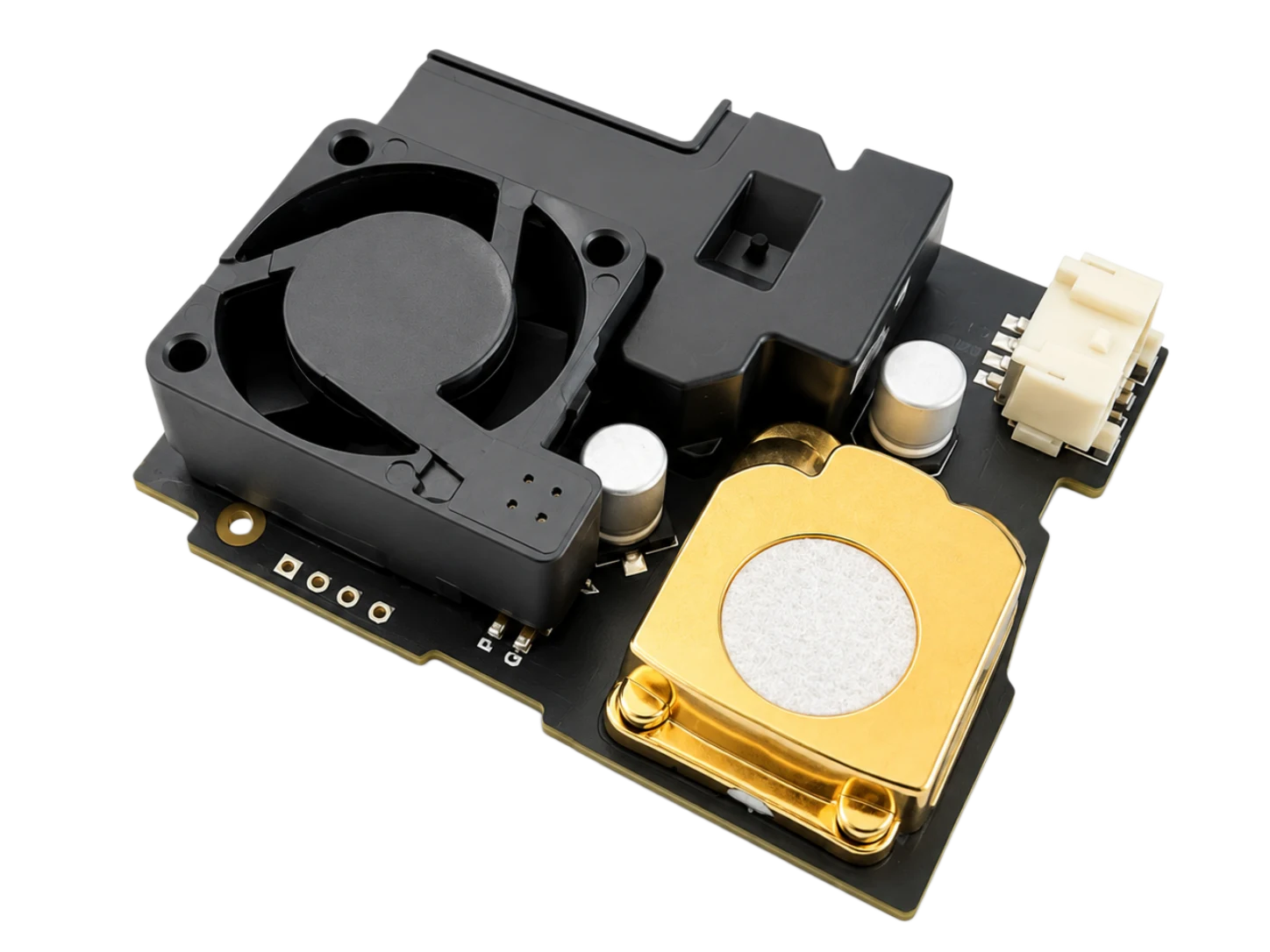
The multi-in-one sensor platform includes a digital temperature sensor and integrates PM2.5, CO2, AQS/TVOC, humidity, delivering multidimensional environmental data through a single interface.
Read more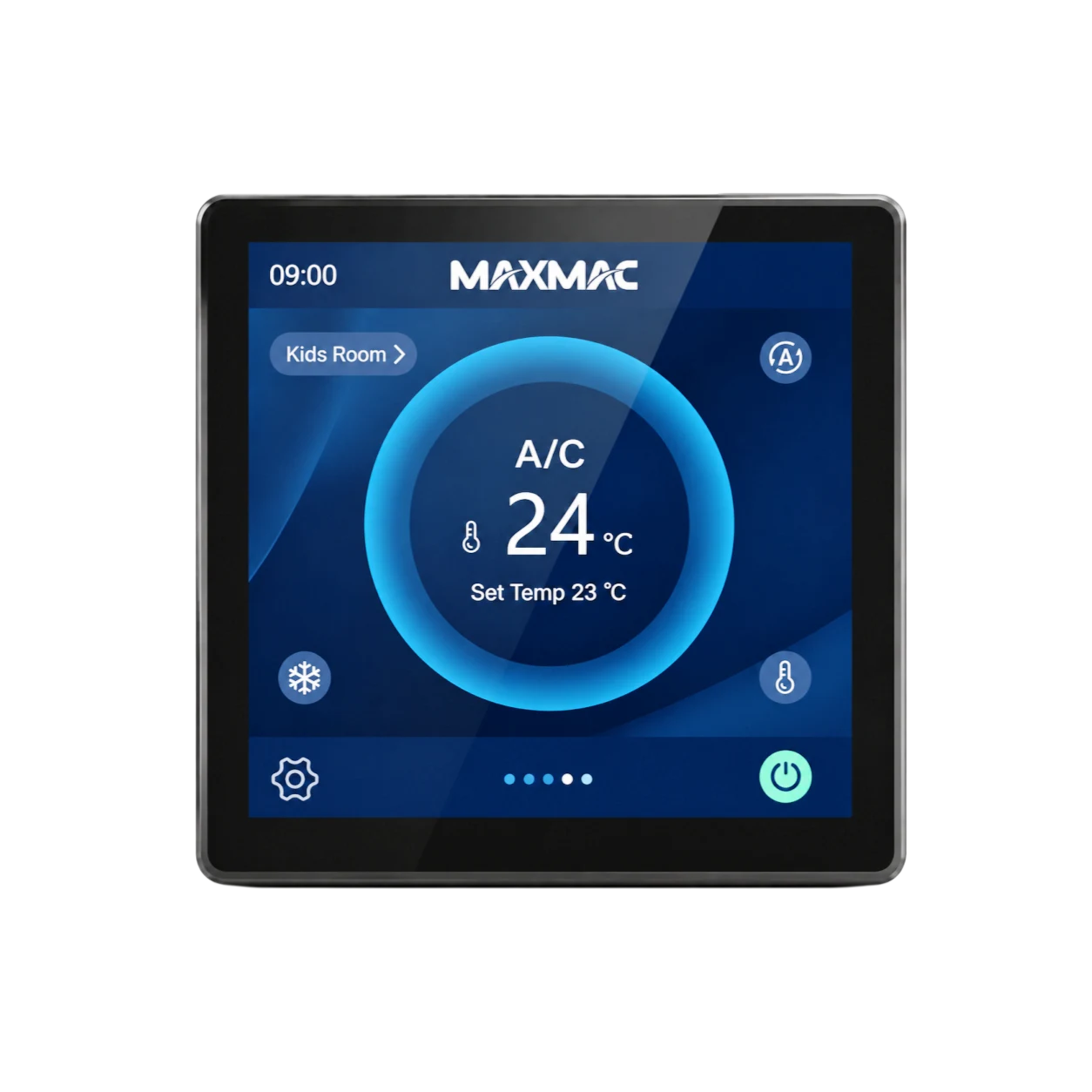
Designed as a temperature and humidity sensor with display, the A63 combines real-time temperature, humidity and indoor air quality monitoring with coordinated control of connected HVAC and ventilation equipment.
Read more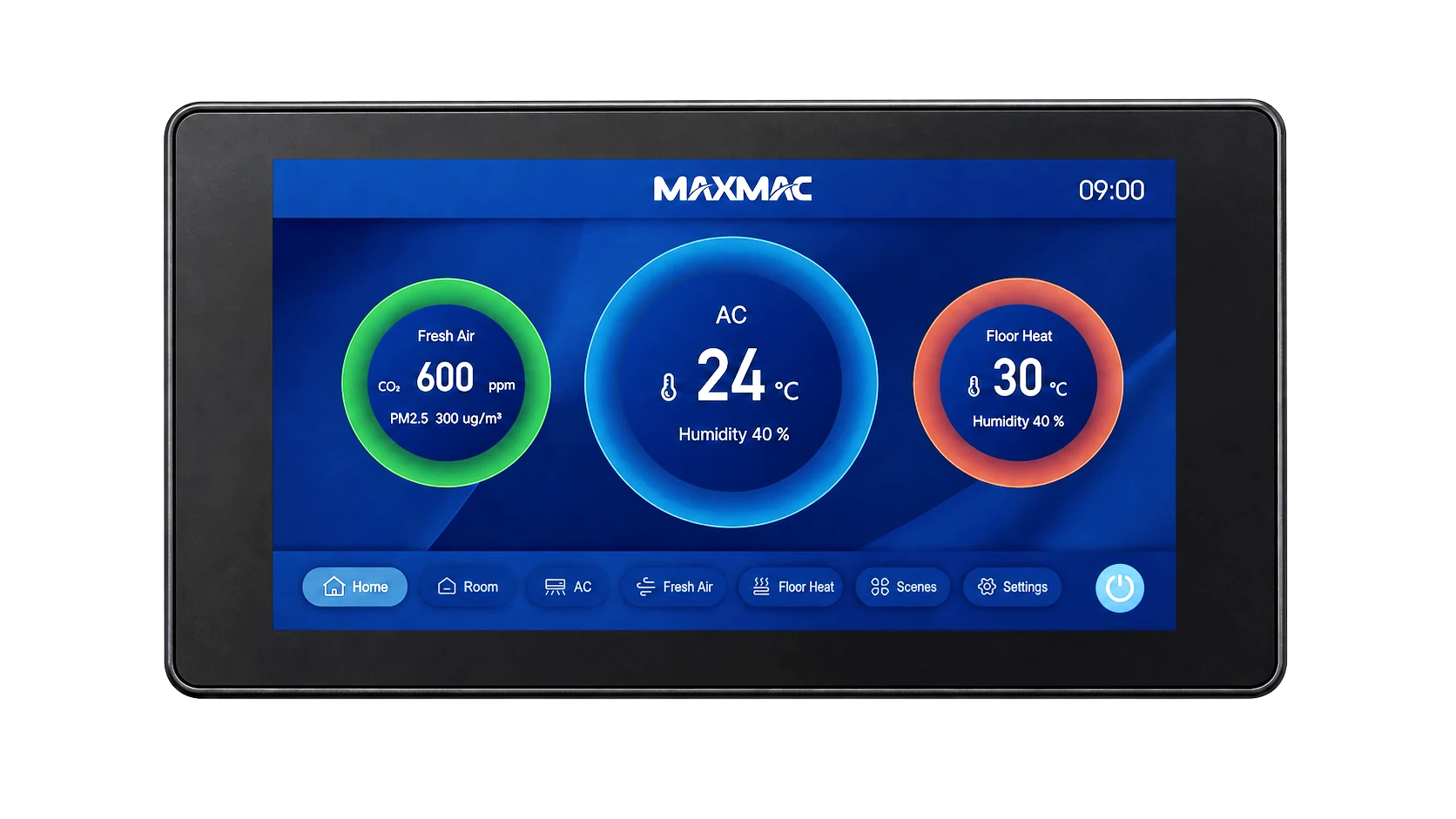
Wide-format smart HVAC thermostat combining environmental data display, temperature and humidity control, and multi-system coordination.
Read more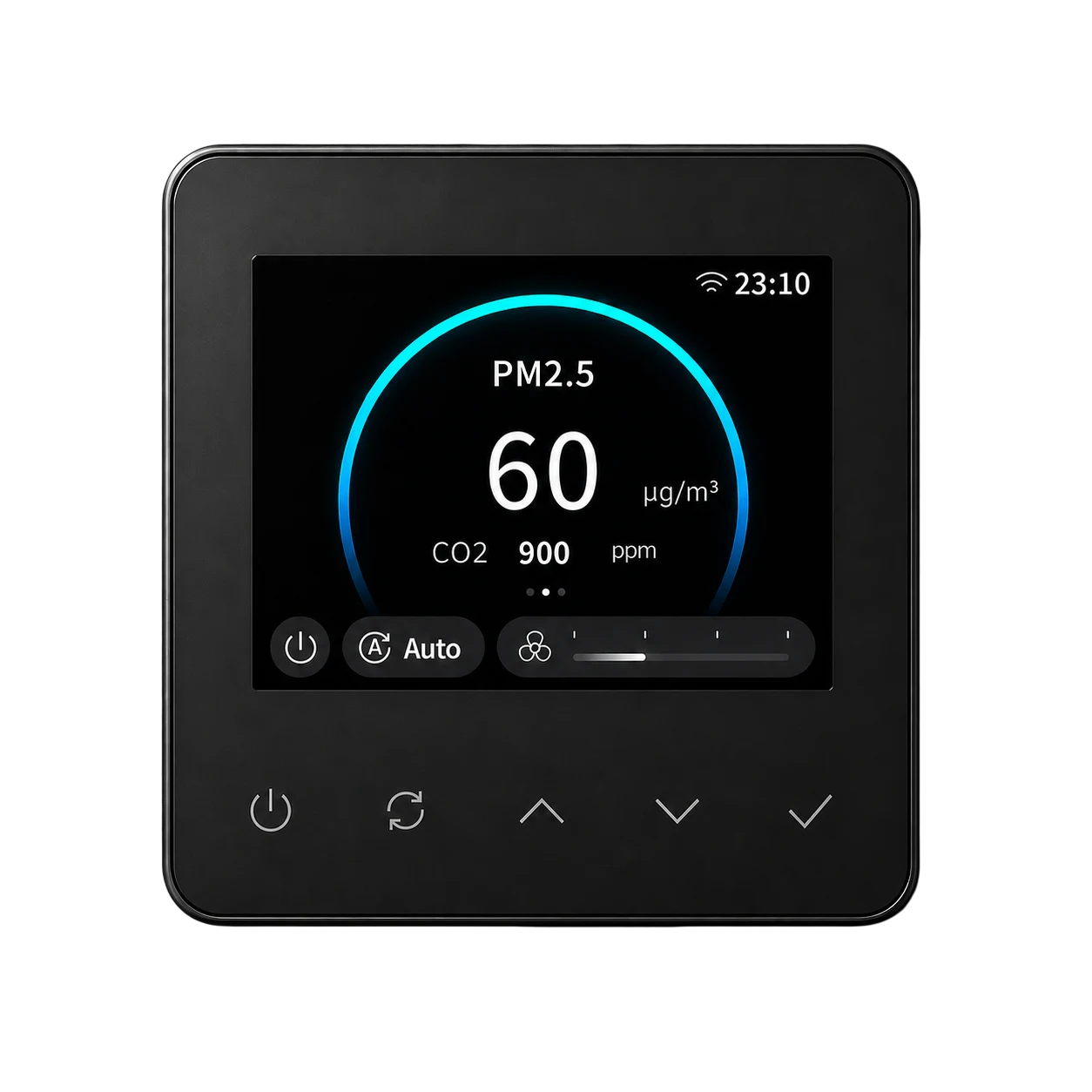
Compact wall-mounted HVAC thermostat with temperature and humidity display, equipment control and RS485 system integration.
Read more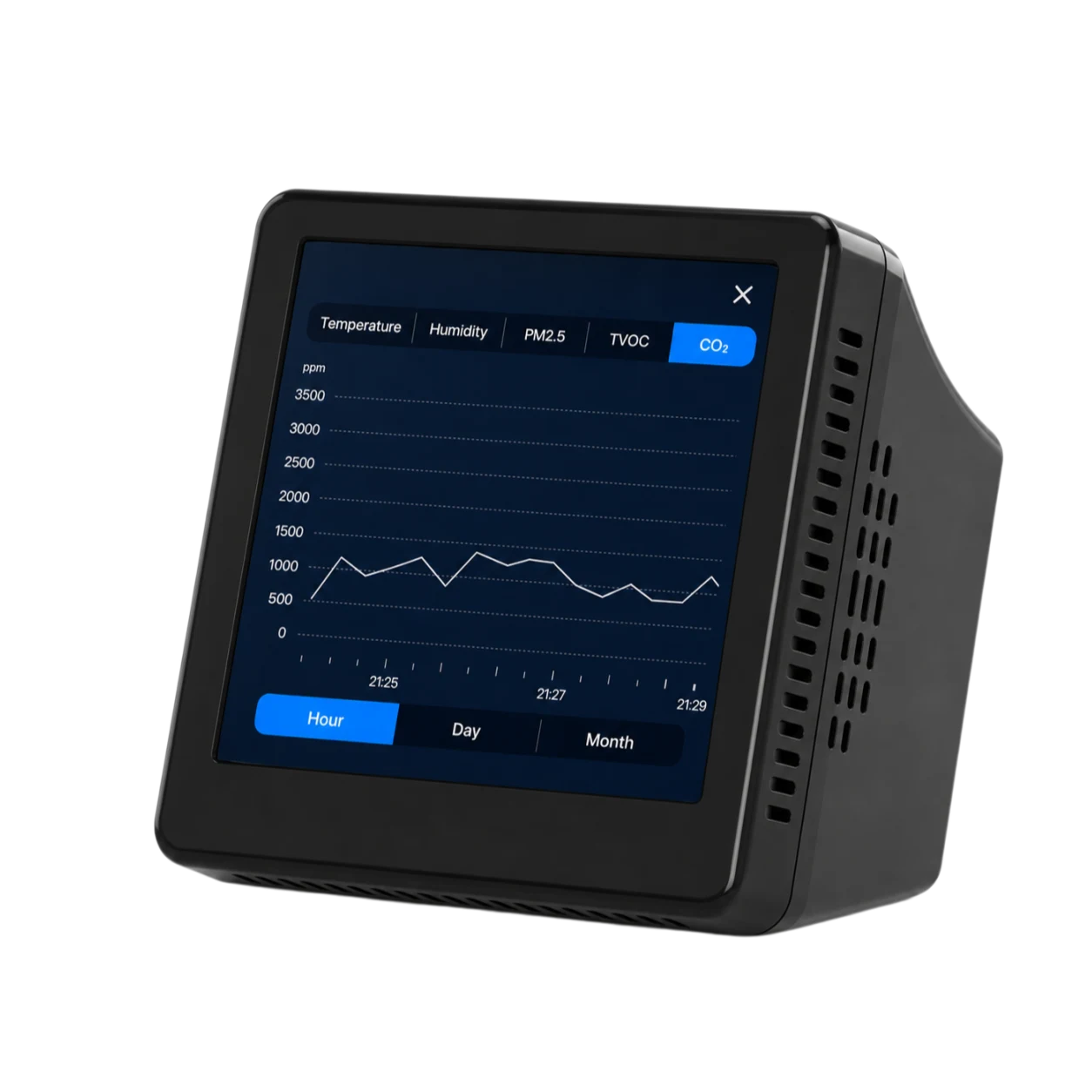
Designed as a temperature and humidity sensor with data logger functionality, the A56 can also operate as a WiFi temperature and humidity sensor for real-time indoor air quality monitoring and coordinated control of connected HVAC and ventilation equipment.
Read moreTECHNICAL DATA

TECHNICAL INSIGHTS
Temperature and humidity sensors typically combine a humidity-sensitive element and a temperature-sensing element with a signal-conditioning circuit and MCU algorithms for communication output. Humidity measurement commonly uses a capacitive humidity sensor. Water molecules in the air change the dielectric constant of the sensing layer, producing a capacitance change that is amplified, temperature-compensated, linearized, and converted into relative humidity data. Temperature can be measured with a digital sensor, a thermistor, or an analog sensing circuit. The system then compensates the humidity reading according to the measured temperature drift characteristics.
The temperature sensor working principle is straightforward: the sensing element converts temperature changes into electrical signals, which are then processed and compensated to produce stable output data. Common temperature sensor types include a digital temperature sensor, an analog temperature sensor and an NTC thermistor. The best option depends on how quickly and accurately the finished product must respond across its operating range, as well as the type of output required by the host system. Once the sensor is integrated into an OEM device, its long-term performance also depends on the PCB layout, protection against condensation and the quality of its calibration curve. MAXMAC therefore evaluates the complete airflow path and mounting position to help maintain consistent readings in the finished product.
CALIBRATION & VALIDATION


Every sensor PCB undergoes automated two-stage, full-range calibration in a standardized temperature and humidity chamber. A high-precision relative humidity sensor reference instrument is used to verify and correct measurement output across the specified operating range, helping ensure consistent accuracy and reliable performance from board to board.
Each calibrated humidity sensor and temperature sensor undergoes multi-point calibration in controlled temperature and humidity chambers before shipment. By collecting more than 100 calibration data points under different environmental conditions, we build temperature and humidity compensation models to correct measurement deviations and improve sensor-to-sensor consistency. This calibration process ensures reliable accuracy and stable performance for OEM applications.
Each temperature and humidity sensor undergoes environmental stress testing in extreme temperature and high-humidity environments, including high-temperature storage, high-humidity exposure, thermal cycling, and condensation tests. Continuous testing for 1–3 weeks helps identify potential issues such as output drift, hysteresis, and response degradation, ensuring reliable performance for industrial temperature sensor applications and OEM equipment integration.
To ensure long-term durability and facilitate maintenance-free operation for our clients, we subject the first batch of pilot production to a rigorous 1-week (168-hour) continuous burn-in test. This intensive aging test process is designed to eliminate early-life sensor drift and stabilize electrochemical reactions. By proactively aging the sensors under load, we guarantee exceptional long-term stability and prevent field failures, significantly reducing post-installation maintenance overhead and total cost of ownership (TCO).

02
MAXMAC operates in-house SMT production lines and airtightness testing equipment, enabling scalable production and end-to-end quality control for multi-in-one sensor platforms with an integrated humidity sensor module. From component placement and soldering consistency to automated finished-unit calibration, every process is completed under unified production standards and remains fully under our control. This provides OEM/ODM customers with stable-quality, traceable sensor products ready for high-volume delivery.
CUSTOMIZABLE TEMPERATURE & HUMIDITY SENSOR PLATFORM
Built on MAXMAC’s configurable IAQ multi-sensor platform, your solution can be developed as a dedicated temperature and humidity sensor module or integrated with PM, CO2, AQS/TVOC and additional environmental measurements in one compact assembly, with capacitive humidity sensing paired with a digital temperature sensor, NTC thermistor, or analog temperature input according to the required measurement ranges, accuracy targets and response times.
OEM customers can customize the PCB dimensions, select the required output interface, and choose whether to integrate a relay based on the available installation space, host system and control logic. These options simplify integration into the target equipment and support application-specific system design.
Choose the particle-size outputs, measurement range, airflow design and calibration required by your application.
Add high-accuracy temperature and humidity data for environmental monitoring and sensor compensation.
Transmit all measurements through UART, I²C, PWM, analog voltage, RS485, CAN, LIN or a custom protocol.
Integrate calibrated NDIR CO₂ measurement into the same compact sensor module and unified data output.
Add AQS or TVOC sensing for odor, pollution-gas and indoor air quality control applications.
A relay can be included or omitted based on the customer’s control logic, load requirements and system architecture.
Combine PM1.0, PM2.5, PM10, CO₂, AQS/TVOC, temperature and humidity functions according to product positioning and installation space.
One connector can transmit multiple sensor outputs, reducing wiring, controller inputs and integration complexity.
Customize relay control, communication protocol, connector, PCB dimensions, firmware logic, calibration and output format.
MANUFACTURING CAPABILITIES
As a professional Smart Sensor manufacturer, MAXMAC operates its own SMT production area with comprehensive PCB assembly and inspection capabilities. Key processes are completed in-house, including electronic component placement, reflow soldering, AOI inspection, firmware programming and functional testing. This integrated capability accelerates prototyping, pilot production and product iteration while supporting OEM/ODM customization of each air quality sensor module, including sensing combinations, interfaces, PCB dimensions, connectors and firmware logic.

MAXMAC combines automated production lines with flexible manual assembly to match different IAQ product structures, order volumes and customization requirements. Automated equipment protects consistency and delivery efficiency in volume production, while skilled workstations support complex assembly, pilot runs and customized air quality sensor module configurations.
Every production stage is connected to our MES system, enabling full traceability across material batches, PCB assembly, sensor calibration, firmware programming and finished-product inspection. This complete manufacturing data trail gives OEM/ODM customers dependable quality assurance and supports reliable volume delivery from an experienced Smart Sensor manufacturer.
TESTING & VALIDATION
MAXMAC’s CNAS-accredited laboratory brings product verification closer to our engineering and manufacturing teams, significantly shortening validation cycles and accelerating the transition from design to volume production. By identifying design weaknesses, potential failure modes, and risk-control points at an early stage, our laboratory capabilities help prevent issues before they reach customers or enter mass production.
Comprehensive mechanical, electrical, environmental, gas, and microbiological testing enables us to verify product performance under demanding operating conditions. This evidence-based validation process strengthens product stability, long-term reliability, and quality consistency while giving OEM/ODM customers greater confidence throughout development and delivery.


TARGET APPLICATIONS

In residential and office HVAC environments, temperature and humidity data can support comfort adjustment, condensation warnings, and coordinated airflow control for HVAC and fresh-air equipment. MAXMAC provides temperature and humidity sensors and transmitters designed for controller integration, giving HVAC manufacturers a reliable environmental-data input. For customers requiring ecosystem compatibility, MAXMAC can help integrate a temperature and humidity sensor with Home Assistant through compatible gateways and communication interfaces. Sensor data can also be made available to a customer-developed temperature sensor app through a compatible wired or wireless communication interface.

Modern intelligent vehicle cabins require temperature and humidity monitoring both inside and outside the vehicle. MAXMAC provides mature multi-in-one thermostats and terminal sensor products with integrated temperature and humidity detection. Data can be transmitted to the vehicle head unit through automotive LIN or CAN, supporting intelligent cabin climate-control logic and providing a dependable air-environment data input for automotive HVAC systems.

Temperature and humidity monitoring is widely used in pharmaceuticals, food, electronic components, museums and other industries where products are sensitive to storage conditions. MAXMAC can provide a temperature and humidity sensor with data logger and complete application solutions combining air-quality and environmental measurements, helping protect stored products and maintain safe warehouse and cold-chain conditions.

In many industrial settings, stable production depends on detecting heat and moisture changes before they affect equipment. An industrial humidity sensor can work alongside an air temperature sensor wherever continuous monitoring is required, from control cabinets to complete production environments. MAXMAC develops humidity sensors for industrial applications that integrate reliably with existing control systems and help reduce condensation-related risks.
AUTOMOTIVE OEM APPLICATION
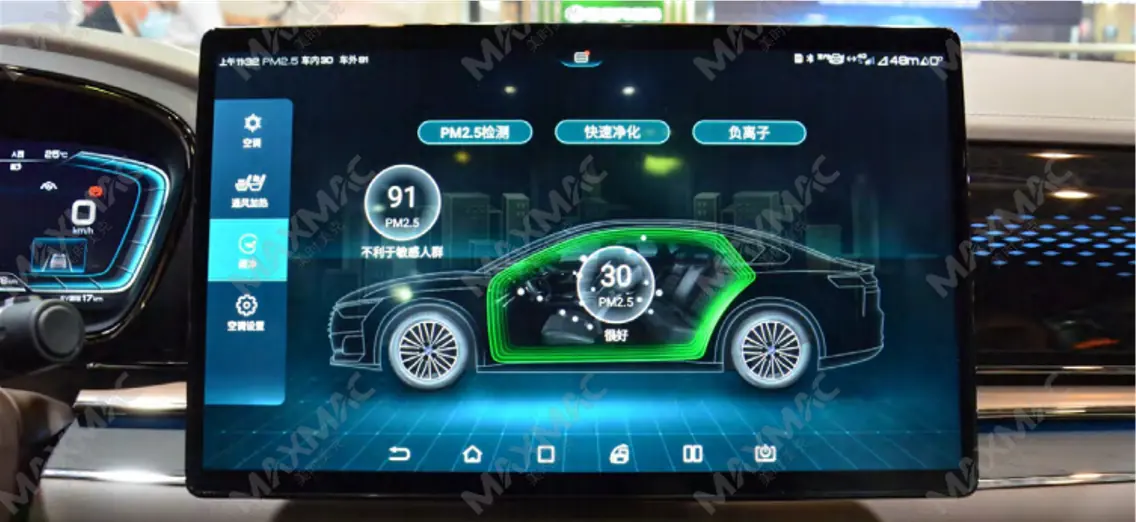
MAXMAC’s S21 multi-in-one automotive module combines a temperature sensor car solution with an NTC temperature-sensing element. Already supplied to multiple automotive OEMs, it provides precise environmental data inputs for climate-control logic, including real-time temperature and humidity monitoring and air quality detection inside and outside the cabin.
Air temperature sensing has become an essential part of the intelligent cockpit, supporting cabin comfort and coordinated HVAC control. MAXMAC’s reliable multi-in-one sensors integrate temperature and humidity detection to make intelligent cabins more responsive, while helping vehicle manufacturers reduce cost, consolidate sensing functions and decrease in-cabin electronic complexity.
OEM/ODM PRODUCT INTEGRATION
MAXMAC’s A63 and A23 thermostat families incorporate our self-developed multi-in-one sensor platform with integrated temperature and humidity sensors. In addition to controlling connected HVAC equipment, each thermostat can operate as a room-level air quality monitor, displaying real-time temperature, humidity and corresponding air quality measurements directly on its screen.
This room-by-room sensing architecture provides more dependable local air data. When paired with MAXMAC adjustable air-distribution dampers, the system can precisely direct ventilation to rooms where air quality actually requires attention instead of activating wasteful whole-building ventilation whenever fresh air is needed. This targeted control strategy improves indoor air management while reducing unnecessary HVAC energy consumption.
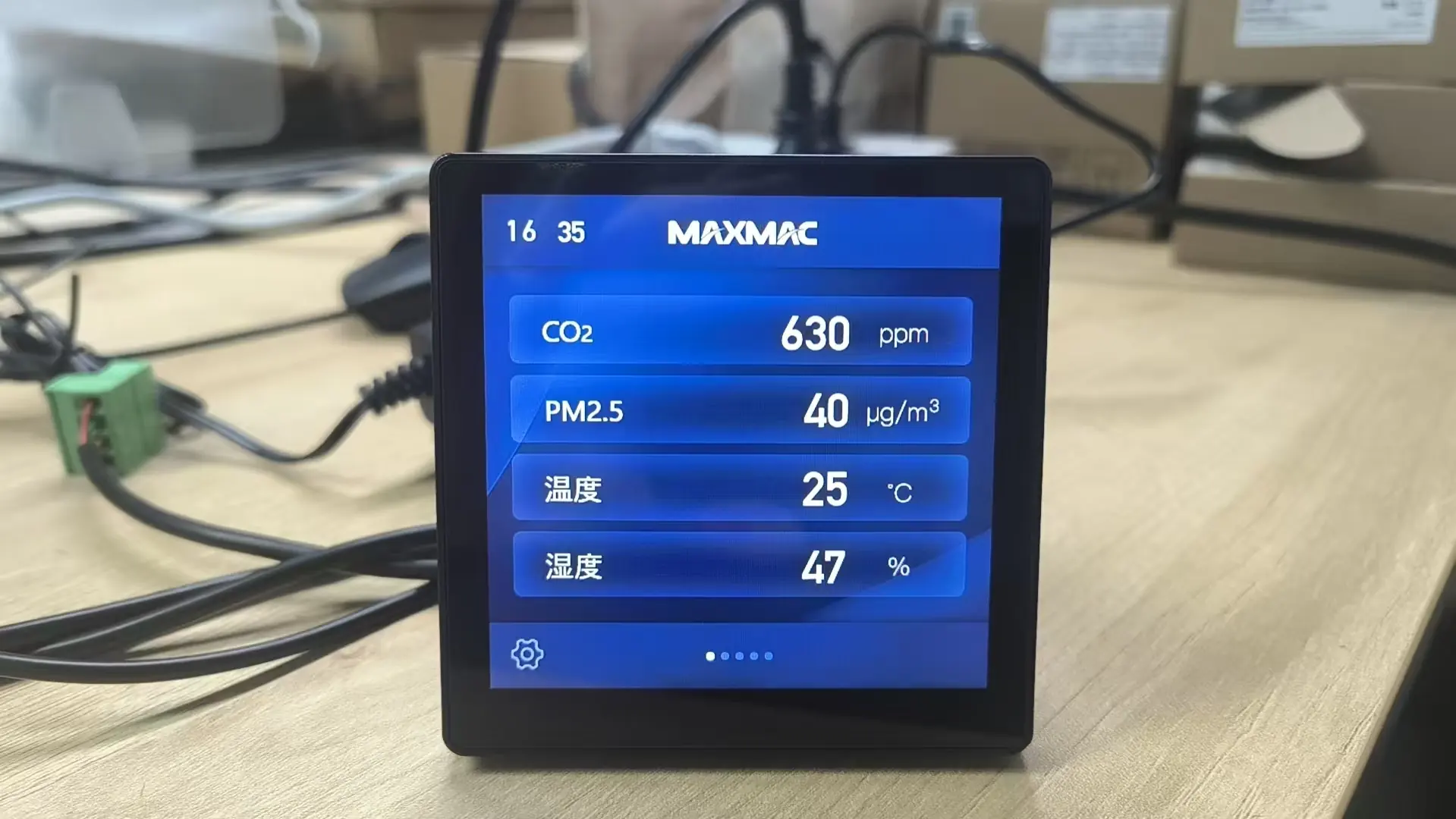
The temperature sensor definition refers to a sensing device that detects temperature changes and converts them into electrical signals that can be measured, processed and transmitted to a controller or monitoring system. Depending on the application, temperature can be measured with a digital sensing element, an NTC thermistor, an RTD or an analog semiconductor sensor. In a temperature and humidity sensor, the measured temperature is also used to compensate the relative-humidity reading and improve accuracy across changing environmental conditions.
Humidity sensors commonly use a capacitive humidity-sensitive element. Water molecules in the air change the dielectric constant of the sensing layer, producing a capacitance change that is amplified, temperature-compensated, linearized and converted into relative humidity data.
A temperature and humidity sensor can connect with Home Assistant through a compatible gateway or communication protocol, allowing users to view real-time measurements, create automation rules and coordinate HVAC or ventilation equipment. Available integration options depend on the selected sensor interface and the customer’s system architecture.
Yes. Sensors are calibrated and verified in controlled temperature and humidity chambers before shipment. Multi-point data is used to build temperature and humidity compensation curves, correct measurement deviation and improve sensor-to-sensor consistency.
MAXMAC can customize digital, analog and industrial interfaces according to the host controller and application. Available options include UART, I²C, RS485/Modbus, CAN and LIN, as well as analog voltage, PWM and customer-specific communication protocols.
The temperature and humidity sensor price is influenced by several factors, with purchase volume and certification requirements having the greatest impact.
To buy temperature sensor products from MAXMAC, please provide your required measurement range, accuracy and output interface. Based on these requirements and your expected order quantity, our engineering and sales teams will recommend a suitable solution and provide tiered pricing.
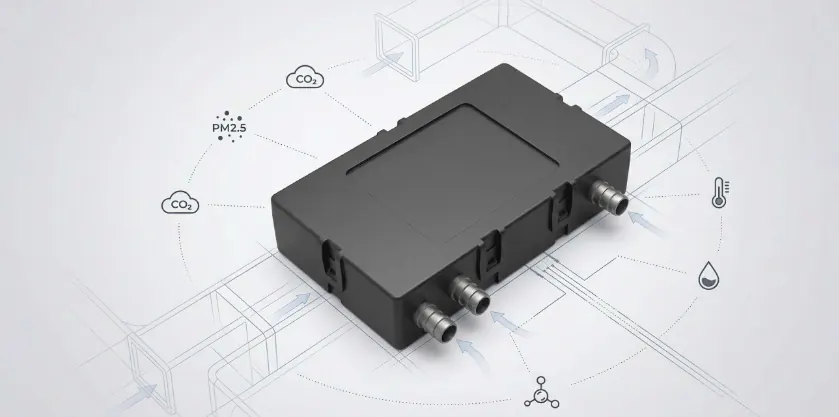
Explore how PM2.5, CO2, gas, temperature and humidity sensing functions are integrated into one module, including component selection, system connection and joint calibration.
Learn how industrial temperature sensors can be isolated from PM2.5 sensors, gas-sensor heaters and power components to reduce thermal interference and improve measurement accuracy.
Review anti-drift design strategies for an rh humidity sensor operating in high-humidity and condensation-prone environments, from protective structures to compensation and recovery logic.
Discover how desktop temperature, humidity and air-quality monitoring terminals support demand-based ventilation, room-level HVAC control and energy optimization in intelligent buildings.
Our product experts will provide the most suitable air solutions and product recommendations.