

A CO2 sensor is a device that measures the carbon dioxide concentration in the air of a given space, in parts per million (ppm). The industry's standard design baseline is 400 ppm, but the latest monthly mean recorded at NOAA's Mauna Loa Observatory in September 2026 has actually risen to 426.07 ppm. CO2 sensors can keep sending real-time data to the system, so HVAC equipment can improve indoor air quality or use energy more efficiently.
What Does a CO2 Sensor Do?
Once the CO2 sensor has a ppm reading, it sends that value to a controller, a gateway, or a vehicle ECU. A building controller may then increase outdoor air, a cabin system may switch from recirculation to fresh air, and a safety system may raise an alarm or log the trend.
A CO2 sensor or CO2 module is a component: an optical or electronic part that outputs a calibrated concentration. A CO2 detector is usually a complete instrument, with thresholds and a local alarm, installed for life safety or leak warning. A ventilation controller, an IAQ monitor, or a cabin HVAC module usually needs a sensor or module that can output ppm continuously. A wine cellar or a beverage gas room may need to warn people, so those applications should use a detector, or a sensor plus a certified alarm path with the right thresholds and indicators.
Why Measure CO2 If It Is a Common, Low-Toxicity Gas?
Carbon dioxide is colorless and odorless at room temperature. People and combustion produce it, and plants use it in photosynthesis. In an ordinary room, the main concern is ventilation, not industrial toxicity. Buildings use the reading to judge whether ventilation is adequate, cabins use it to manage in-vehicle air, and other systems use it for confined-space safety or greenhouse enrichment. These applications all involve the same gas, but the concentrations differ a lot, and each one makes a different decision from the reading.
CO2 and indoor air quality
People exhale CO2. In a meeting room, classroom, or office, indoor concentration rises when outdoor air cannot keep up with the number of people in the room. Common indoor sources include a crowd in a small space, insufficient outdoor air, and emissions from fireplaces or heaters when ventilation is poor.
In an HVAC Air Quality Monitoring application, the controller compares the CO2 reading it receives with a set target, then adjusts outdoor air or damper position while still meeting the project's minimum ventilation rate.
Automotive cabins
On a vehicle, a CO2 sensor is used for cabin air quality and for the HVAC system's recirculation strategy. As more people sit in a poorly ventilated cabin, the CO2 level rises. This reading helps the HVAC controller assess fresh-air needs; it does not by itself measure drowsiness or oxygen concentration. Cars are also more highly equipped than before, so people spend more time in the vehicle than they used to. Long-distance travel, in particular, calls for closer attention to cabin CO2 monitoring. As The Recirculation Paradox and Cabin CO2 Standardization explain, the HVAC controller uses the cabin CO2 reading, with other inputs, to decide when a cabin system may switch from recirculation to fresh air, and when recirculation can continue.
CO2 concentration and effects on the human body
Outdoor background, the commonly used ventilation reference, and the U.S. occupational 8-hour limit are shown below.
| CO2 concentration | What it refers to | Source |
|---|---|---|
| 426.07 ppm | Monthly mean outdoor background at NOAA's Mauna Loa Observatory in September 2026. Local outdoor air is often also in the 420–450 ppm range. | NOAA Global Monitoring Laboratory, Trends in CO2 (page updated October 9, 2026) |
| About 1,000 ppm | A widely used ventilation reference, not a universal health limit or an ASHRAE requirement for acceptable IAQ. | ASHRAE public policy brief, Indoor Carbon Dioxide, Ventilation and Indoor Air Quality (updated June 2026) |
| 5,000 ppm (8-hour TWA) | OSHA permissible exposure limit. | OSHA chemical data: Carbon dioxide, citing 29 CFR 1910.1000 Table Z-1 |
At much higher concentrations, the concern is no longer just ventilation, but the direct effects of CO2, oxygen displacement, and acute exposure. NIOSH gives a recommended 15-minute short-term exposure limit of 30,000 ppm, and an immediately dangerous to life or health (IDLH) value of 40,000 ppm.
Industrial and confined-space safety
Breweries, beverage carbonation rooms, dry-ice storage, food processing, and some laboratories release or store large amounts of CO2. Because CO2 is heavier than air, with a vapor density of 1.53 according to OSHA, leaked gas can collect in pits, cellars, and other low spots. In these places, CO2 monitoring has to be taken more seriously, due to a leak that can reach a hazardous level before anyone notices it.
Refrigerant leak detection is a different job
R744 is in fact CO2, and using CO2 as a refrigerant has become a trend, due to tighter environmental regulations. NDIR can therefore also detect an R744 refrigerant leak, though the operating environment and the required parameters will change accordingly. An R744 leak can also have serious consequences: the gas is heavier than air, so it can collect in low spots, displace oxygen, and lead to dizziness or asphyxiation. That is why leak detection is necessary.
Agriculture and process uses
In a closed greenhouse, plants can draw CO2 down during the day as they photosynthesize, and growers may also add CO2 to support yield. In both cases, a CO2 sensor is used to keep the level near a set point, so plant growth efficiency can stay as high as possible.
Climate and emissions context
CO2 is also a major greenhouse gas, and the outdoor background has been rising. When the Mauna Loa Observatory record began in 1958, it was a little over 300 ppm; it is now above 420 ppm.
Types of CO2 Sensors
Not every product labeled a "CO2 sensor" measures carbon dioxide in the same way. Some report a real CO2 concentration in ppm; others, as What Is the Difference Between NDIR and MOS Sensors? explains, report equivalent CO2 (eCO2), which is estimated from VOCs or other gases.
| Type | What it reports | How it works, in brief | Often a good fit when | Poor fit when |
|---|---|---|---|---|
| NDIR | Real CO2 ppm | Measures infrared absorption near 4.26 μm | HVAC, IAQ, cabins, and most OEM designs that close a ventilation loop on CO2 | The bill of materials cannot fit an optical cell, and the application does not actually need real CO2 |
| PAS | Real CO2 ppm | Absorbed infrared energy forms a pressure wave, detected by a microphone | Compact designs that still need a real CO2 measurement | The acoustic path cannot be protected, or the module has not been verified in the application's noise and vibration environment |
| Thermal conductivity (TCD) | A concentration inferred from heat-loss differences | A heated element responds to the thermal conductivity of the gas mixture | Higher concentrations, or relatively simple gas compositions, depending on the design | Low-ppm, mixed indoor IAQ, because other gases change thermal conductivity and can look like a change in CO2 |
| Electrochemical (EC) | An electrochemical signal related to CO2 | A chemical cell or solid-electrolyte element produces a signal related to CO2 | Some medical and process applications, when the cell is designed and validated for that use | Treating a generic electrochemical cell as a plug-and-play indoor IAQ CO2 sensor, without a matching datasheet |
| MOS | Often eCO2, not real CO2 | Metal-oxide conductivity changes with reducing gases and VOCs; the "CO2" value may be estimated from that signal | VOC or air-quality indication, if the interface states clearly what is being measured | Demand-controlled ventilation, or any closed loop that needs real CO2 ppm |
NDIR (non-dispersive infrared) sensors
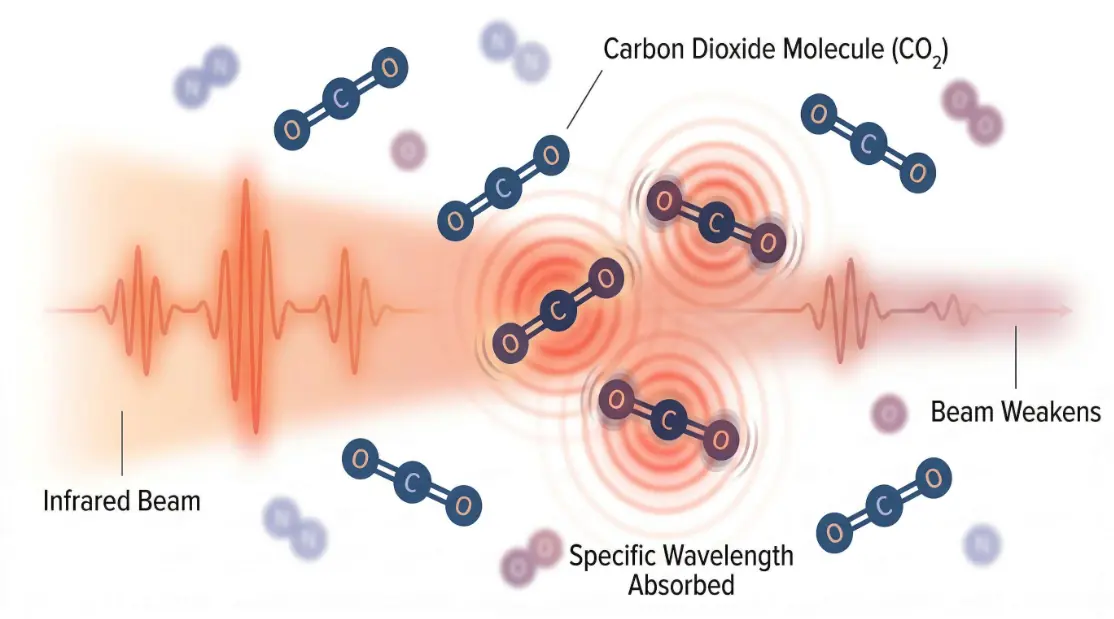
NDIR is the mainstream method when an OEM HVAC, IAQ, or cabin module needs a real CO2 reading. Carbon dioxide absorbs infrared light in a characteristic band near 4.26 μm. The sensor sends infrared light through a gas cell, then through a filter for that band, and measures how much light remains. The higher the CO2 concentration, the more light is absorbed and the less light is transmitted.
Photoacoustic spectroscopy (PAS) sensors
PAS CO2 sensors also start from an infrared wavelength that CO2 absorbs, but they do not mainly measure remaining light on a photodiode. As the light source turns on and off, the absorbed energy makes the gas expand and contract, forming a small pressure wave. A microphone or similar element detects that wave and converts the signal into a CO2 concentration.
Thermal conductivity (TCD) sensors
A thermal conductivity (TCD) sensor measures how quickly the sample gas carries heat away from a heated element, such as a platinum wire. Different gases conduct heat differently, so a change in the mixture changes the resistance or temperature. Used carefully, this can indicate CO2 concentration, and it is a better fit at higher concentrations or when the gas composition is fairly well known. Water vapor or other process gases can also move the reading. In low-ppm indoor air, where many gases are present and the useful signal is small, TCD is usually not the first choice.
Electrochemical (EC) sensors
Some CO2 instruments use an electrochemical or solid-electrolyte cell. The target gas takes part in a reaction or in ion transport, and the cell produces a current or potential related to concentration. This approach appears in some medical and process instruments.
Metal oxide semiconductor (MOS) sensors
A MOS sensor uses a metal-oxide film whose conductivity changes when it meets reducing gases and many volatile organic compounds. That makes MOS a fit for VOC or air-quality indication. If a MOS-based product displays a "CO2" value, the datasheet should be checked carefully before that number is treated as a carbon dioxide concentration.
eCO2 is not the same as real CO2
Equivalent CO2, or eCO2, is an estimate. Many MOS or VOC modules derive a CO2-like number from a VOC signal, sometimes assuming a correlation between occupancy, VOCs, and CO2, and the display may still say "CO2." This value can serve as a rough air-quality indication, but it cannot replace a direct CO2 measurement. Check What Is the Difference Between NDIR and MOS Sensors? for more detail.
How Do NDIR CO2 Sensors Work?

An NDIR detector measures infrared intensity, not ppm directly. The relationship follows the Beer–Lambert principle: light transmission decreases as the number of absorbing CO2 molecules along the optical path increases. Optical path length therefore matters too. A longer path can improve sensitivity, but it also affects the size and design of the gas chamber.

T: transmittance, the fraction of incident light transmitted through the gas; dimensionless.
I: transmitted infrared intensity after absorption.
I0: incident infrared intensity before absorption, measured on the same basis as I.
ε: the wavelength-dependent absorption coefficient in this natural-exponential form.
c: CO2 concentration in units compatible with ε.
d: optical path length through the gas.
e: the base of the natural exponential, approximately 2.718.
Transmittance T is the ratio of the transmitted light intensity I to the incident light intensity I0, and it falls as CO2 absorbs more strongly at that wavelength (ε), as the concentration c rises, or as the optical path length d gets longer, so the measured light can be turned into a CO2 reading in ppm.
The module converts this optical response into a concentration using its calibration data and compensation algorithms. Temperature affects the light source, detector, and gas density; pressure also changes the number of molecules in the optical path at a given ppm concentration. Depending on the module, these effects may be compensated internally or require an adjustment by the host system.
Single-beam, single-filter architecture
The simplest arrangement uses one source, one optical path, one filter, and one detector. It is compact and relatively inexpensive. Without a built-in reference channel, source aging, dirt on the optical path, and temperature can move the baseline, so this architecture usually depends more on periodic calibration or a software baseline strategy.
Dual-beam or reference-channel architecture
A second path, filter, and detector can be set at a wavelength that CO2 does not absorb, or as a reference path that sees the same source. The module then compares the measurement channel with the reference channel to reduce drift from source aging. The two paths and two detectors may still age at slightly different rates.
Single-path, dual-filter architecture
The two filters can usually switch, so the measurement wavelength and the reference wavelength share the same optics and the same sensing element. This can keep the benefit of a reference channel while reducing the difference that comes from two paths and two detectors aging separately.
Key Components, Accuracy, Reliability, and Calibration
Key components of a CO2 sensor
A typical NDIR module has an infrared source, a gas cell, a wavelength filter, and a detector. If the architecture includes a reference channel, that is part of the module as well. A signal-processing stage then converts the optical signal into ppm.
The housing matters too. Even a slight deformation of the module shell can throw the calibration off. A unit may have been calibrated once already, but during handling in the factory or while packed for shipment, light pressure between units can start to deform the shell and the reading will no longer be accurate.
How to check accuracy
A common check is to compare the module with a precision instrument that meets the national standard. A CO2 concentration curve is generated, and the trace from the module is compared with the trace from that instrument. Acceptance should use the accuracy expression and test conditions in the specific module's datasheet, including reference-gas uncertainty, temperature, and stabilization time. A generic ±1–3% band is not a universal pass criterion.
Reliability in real operating environments
In a natural environment, many factors can cause long-term drift, such as temperature, humidity, and dust. Agriculture is a harsh example, with high humidity, possible condensation, and sometimes sulfur fumigation. The same physical process occurs in a damp air-handling unit or a dusty return duct. A module that measures accurately on the bench can still drift in the field when the optical path is contaminated, or when firmware compensation is used outside its specified range.
How to calibrate a CO2 sensor
Calibration turns the raw optical or electrical signal into a reliable ppm value. In production, modules are usually checked at known concentrations. In the field, three methods are common:
- Automatic baseline correction (ABC) or a similar baseline routine. It assumes the sensor will occasionally see a known low background, then trims the zero. On MS03-010, ABC is enabled by default, with a 7-day period and a 400 ppm target. This setting is specific to MS03-010.
- Manual background calibration. The integrator places the sensor in a known fresh-air or reference environment, then sends a command to update the baseline.
- Zero and span (or multi-point) calibration with certified gas. This is the more rigorous field method when the application requires it.
Why ABC can drift in a space that stays occupied
ABC assumes the sensor will occasionally see a low background close to its baseline, then trims the zero to that low point. On MS03-010, that target is 400 ppm over a 7-day period; this setting is specific to MS03-010. In a room that stays occupied around the clock, such as a hospital ward, a control room, or a greenhouse, the lowest reading in that period may never return to outdoor air, so ABC can treat a higher indoor minimum as 400 ppm and pull later readings down. If the system only needs the difference between occupied and unoccupied periods, that relative change may still be usable for ventilation control. If the application needs an accurate absolute ppm value, turn ABC off and use manual background calibration or a known-gas check instead.
Placement, Alarms, and How to Read the Data
A sensor in a plume, a dead corner, or at the wrong height for the hazard can give a misleading reading.
Where should a CO2 sensor be located?
Mounting height follows the application.
- Industrial safety and leak accumulation. CO2 is heavier than air and collects in low spots. For insulated liquid carbon dioxide systems used in beverage dispensing, 2024 International Fire Code section 5307.3.2 specifies, where that gas detection provision applies, that the carbon dioxide sensor to be installed in the anticipated area of gas accumulation, within 12 inches (305 mm) of the floor, or in another approved location.
- Indoor air quality and ventilation control. The sensor should see the air people actually breathe, and should be kept off supply jets and out of dead corners. ASHRAE Standard 62.1 defines the breathing zone as 3 to 72 inches (75 to 1,800 mm) above the floor and more than 2 feet (600 mm) from walls or fixed air-conditioning equipment; this wording is from the 2016 edition. The sensor should be placed in this zone, away from doors, open windows, and supply outlets.
- Greenhouses. The sensor should be kept out of the enrichment plume and in a position that represents the canopy or the growing space, then read against vents and gas distribution.
What triggers a CO2 alarm or a ventilation response?
When concentration crosses the threshold set for that system, an alarm is triggered or ventilation changes.
On a safety detector, crossing the set concentration starts an alarm or a supervisory signal. In the same International Fire Code section cited above, one specified design gives a supervisory alarm at 5,000 ppm at a normally attended location, and an audible-visual alarm at 30,000 ppm in the room. These code alarm setpoints and occupational exposure limits serve different purposes. The applicable code edition and local requirements govern the final alarm design.
How to interpret CO2 readings
When a reading looks wrong, check the installation and the space first. See whether the device is near a supply outlet or an open door, and whether occupancy has changed. A sudden rise in a beverage gas room may be a leak; a sudden rise in a meeting room at the start of a meeting is often just people arriving. Check placement, the gas source, and airflow before treating the issue as drift or a calibration problem.
Safety Standards, Lifespan, and Common Questions
Which safety standards and guidelines usually apply?
- OSHA, 29 CFR 1910.1000 Table Z-1, on the OSHA carbon dioxide chemical data page: 5,000 ppm as an 8-hour time-weighted permissible exposure limit.
- NIOSH: a recommended 8-hour (up to 10-hour) TWA of 5,000 ppm, a short-term exposure limit of 30,000 ppm, and an IDLH of 40,000 ppm.
- ANSI/ASHRAE Standard 62.1: building ventilation rates and DCV requirements.
- International Fire Code section 5307.3.2, for the beverage carbon dioxide systems described above: sensor height, and the 5,000 / 30,000 ppm alarm points in that section.
How long will a CO2 sensor last?
Some NDIR products are designed for 10 to 15 years of service, but this is model-specific. The MS03-010 product specification lists a service life of at least 15 years. Actual service life depends on the infrared source, operating conditions, and whether the optical path stays clean; use the selected model’s documentation for maintenance and replacement planning.
Is a CO2 detector the same as a carbon monoxide detector?
No. Carbon dioxide (CO2) and carbon monoxide (CO) are different gases, and they use different sensors. A CO2 sensor or detector cannot replace a CO detector, and a CO detector cannot measure carbon dioxide. If combustion appliances are present, both may be needed.
Does a CO2 sensor detect natural gas or a combustible gas leak?
No. A CO2 sensor cannot replace a methane, propane, or other combustible-gas detector, and it cannot reliably report a natural gas leak. A CO2 safety detector is for carbon dioxide leaks and buildup.
How OEMs Should Choose a CO2 Sensor
Start with the measurement: real CO2, not eCO2
If the control loop needs a real carbon dioxide concentration, the design should specify NDIR or another method that measures actual CO2. If the product only needs VOC or a general air-quality indication, the interface should say so clearly, and the output should not be labeled CO2.
Match the use case: building IAQ, cabin, or safety
Range and operating temperature change with the application, as do response, mounting, and the certification path. A building IAQ module with a 400–9,999 ppm range and a 12–24 V RS485 interface is not automatically a fit for a cabin that runs from −40°C to 85°C, and it is not a substitute for a safety detector with code-defined alarm points. Automotive and industrial air quality modules also differ in environment and integration, as Automotive vs Industrial Air Quality Sensors explains.
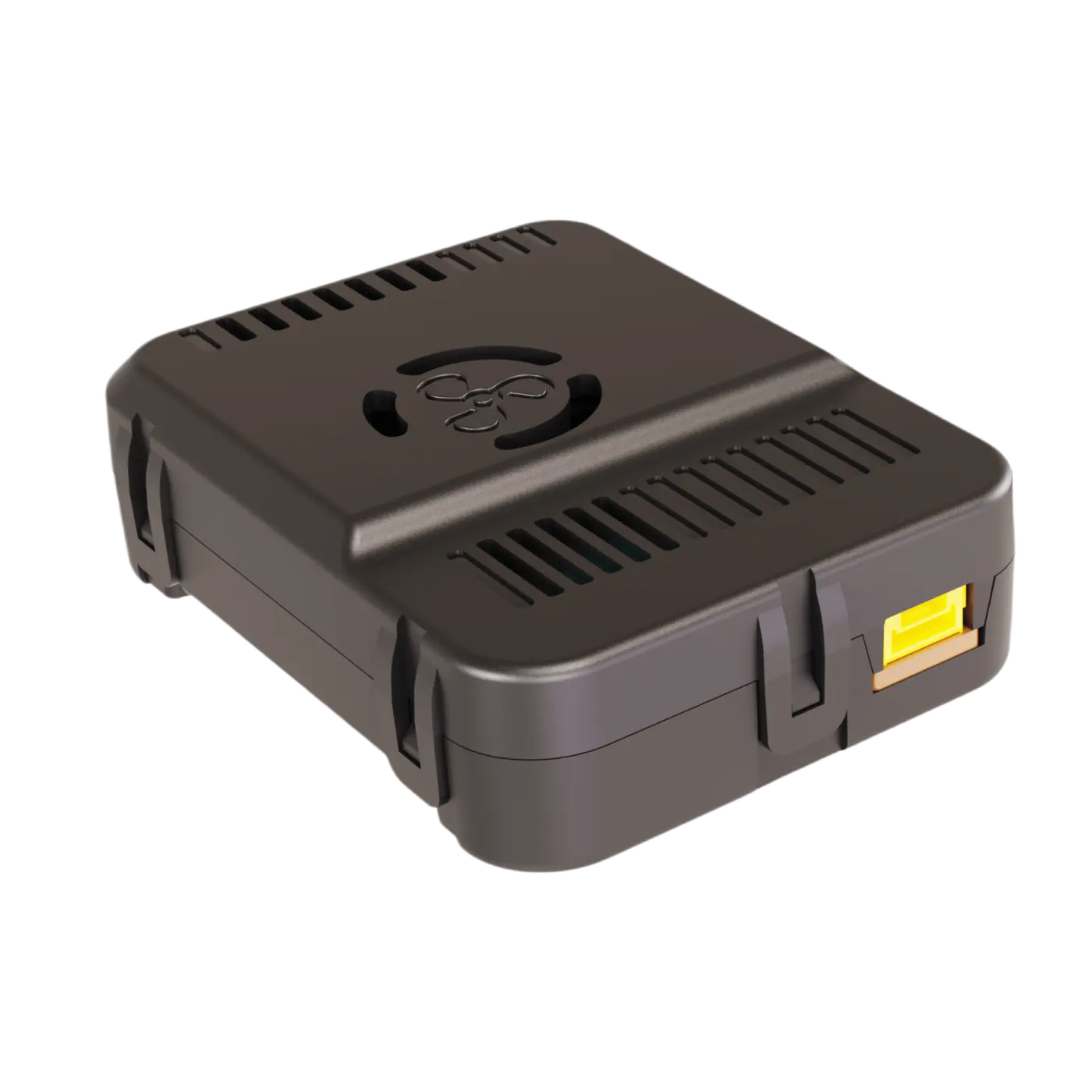
A54-24 CO2 Sensor
Housed CO2 sensor for HVAC equipment and building IAQ integration.
- 400–9,999 ppm; 1 ppm resolution
- Accuracy: ±(50 ppm + 5% of reading)
- 12–24 VDC; RS485
- −10°C to 50°C; 0–95% RH, non-condensing
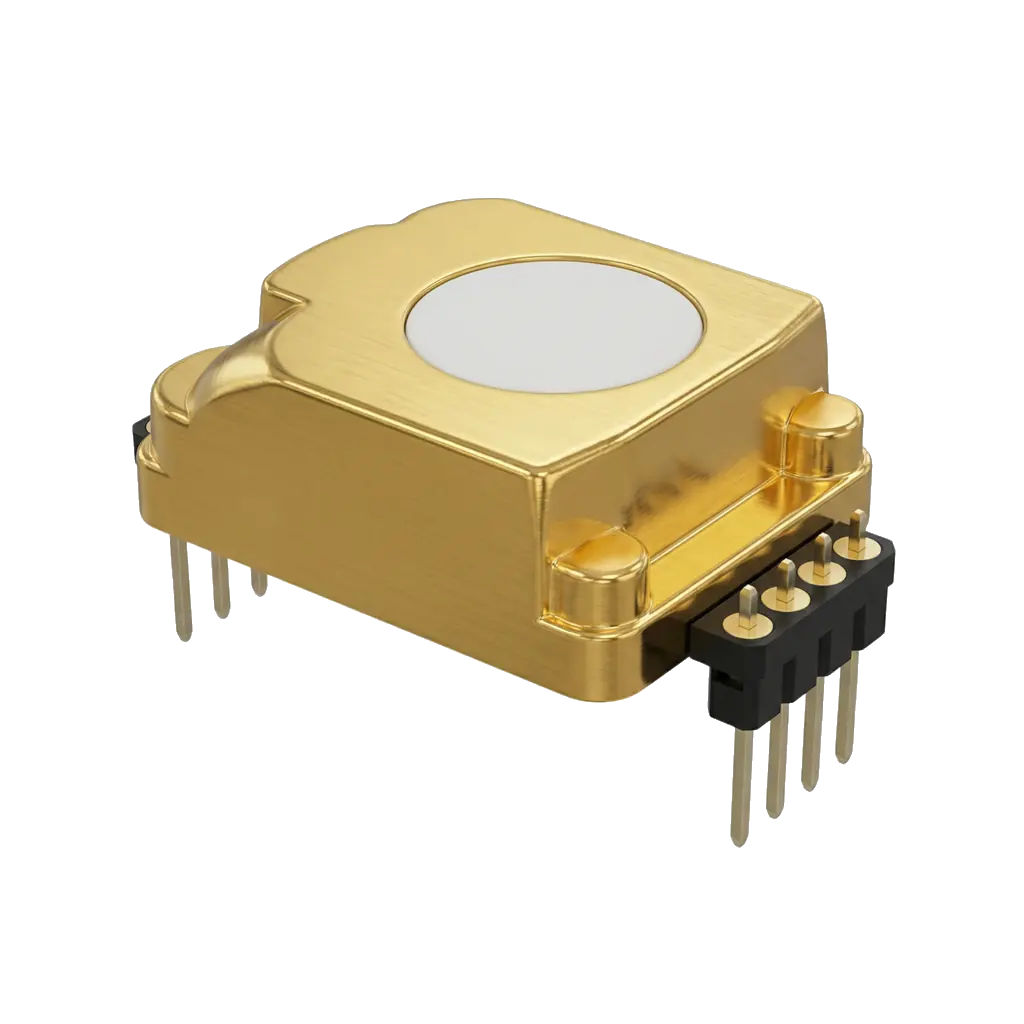
MS03-010 NDIR CO2 Sensor Module
Compact module for ventilation, indoor air quality monitoring, and OEM equipment.
- 0–50,000 ppm; 1 ppm resolution
- Accuracy: ±(50 ppm + 3% of reading), subject to specification test conditions
- 4.5–6.5 VDC; UART and PWM; RS485 via hardware expansion
- 0°C to 50°C; non-condensing
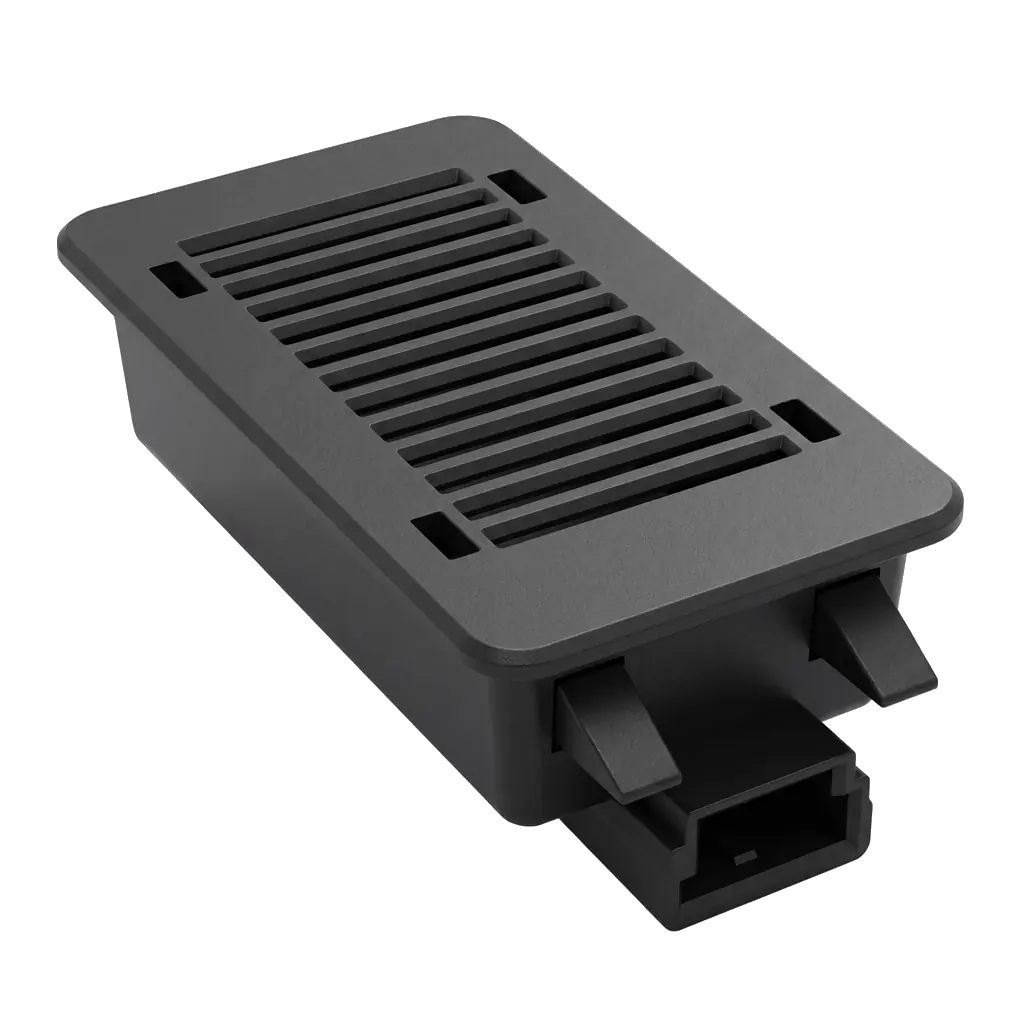
Automotive CO2 Sensor
Vehicle cabin CO2 monitoring and fresh-air / recirculation control.
- 0–50,000 ppm; 1 ppm resolution
- Accuracy at 0–50°C: ±(50 ppm + 5% of reading); outside this band: ±(100 ppm + 10% of reading)
- 9–16 VDC; T90 ≤60 s
- −40°C to 85°C; 0–95% RH, non-condensing
Standalone CO2 module or multi-in-one IAQ module?
If the system only needs carbon dioxide, a dedicated CO2 module is the direct choice. If the device also has to report PM2.5, TVOC or AQS, temperature, and humidity at the same sampling point, a multi-in-one IAQ module can reduce interfaces and put these measurements on one board. This kind of integration has its own structural and calibration issues, as Multi-in-One Air Quality Module System Design explains. Dedicated CO2 sensors can be compared with multi-sensor modules based on what the host actually needs to measure.
What to check on the datasheet before you design in
Take A54-24 as an example. Its datasheet lists a range of 400–9,999 ppm, a resolution of 1 ppm, and an accuracy of ±(50 ppm + 5% of reading). Range is the concentration the sensor can report. Accuracy is how close that reading is to the true value, so at 1,000 ppm this expression is ±100 ppm. Resolution is only the smallest step the reading can show, not the same as accuracy.
On calibration, check whether ABC is enabled, what baseline it assumes, and whether manual background, zero, or span calibration is supported. The operating environment is −10°C to 50°C and 0–95% RH, non-condensing; these limits must cover the actual installation, including the airflow path inside the finished housing. Even with the right datasheet range, the measurement will be off if the housing keeps sample air from the cell, or if the inlet sits in a supply jet.